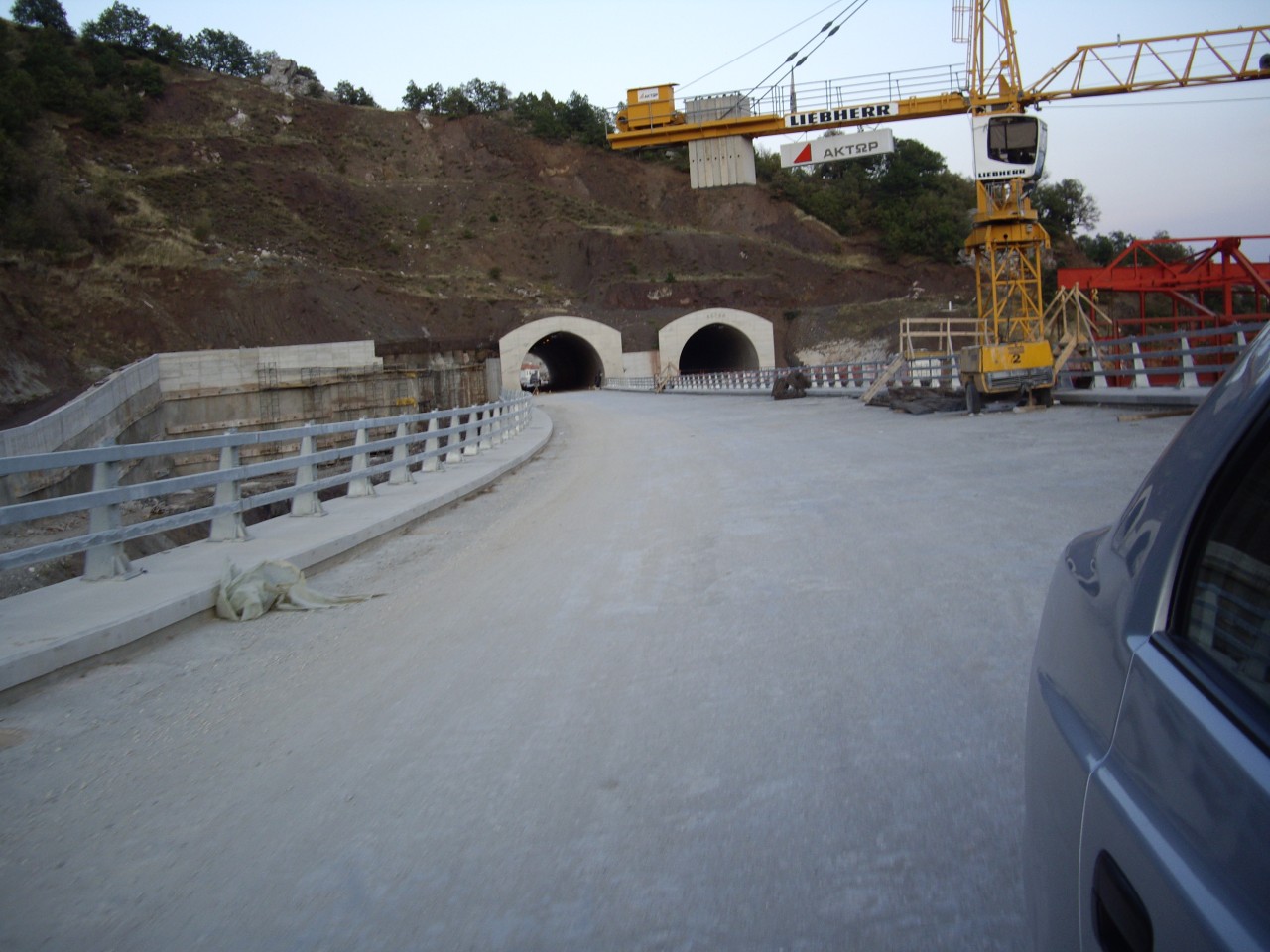
Looks like a road
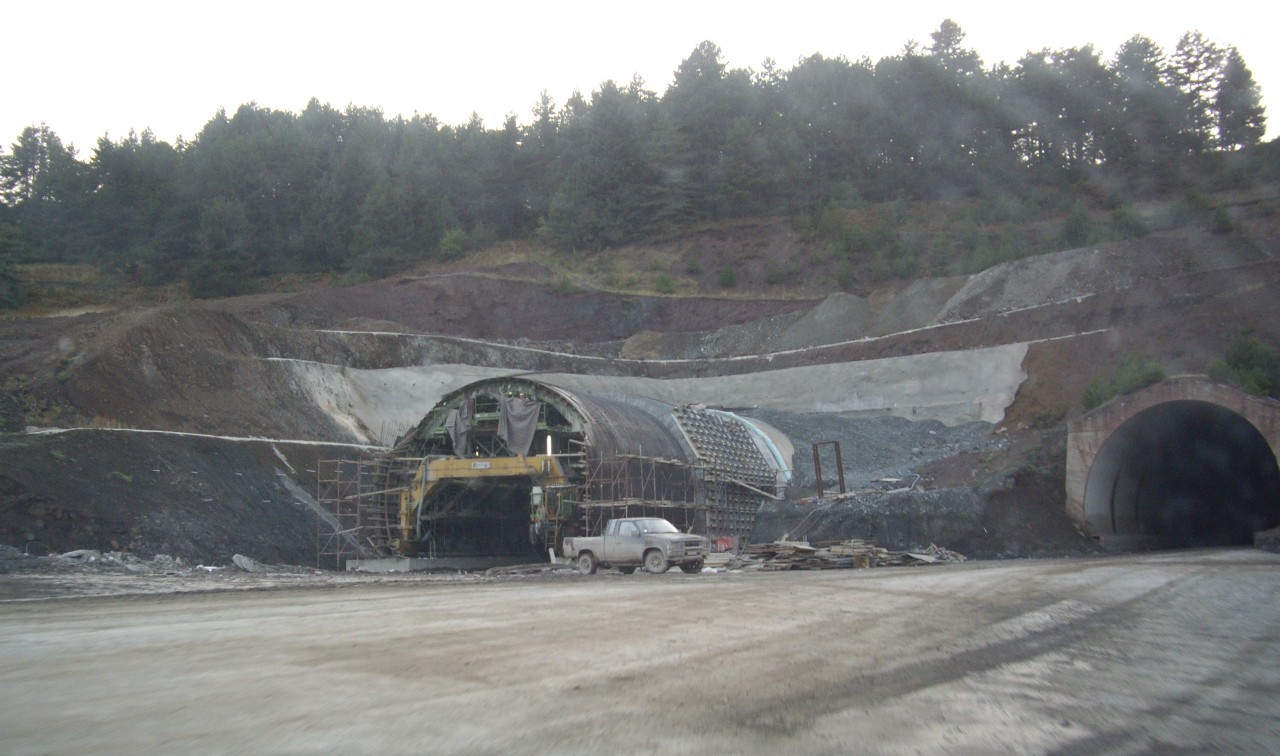
Less like a road
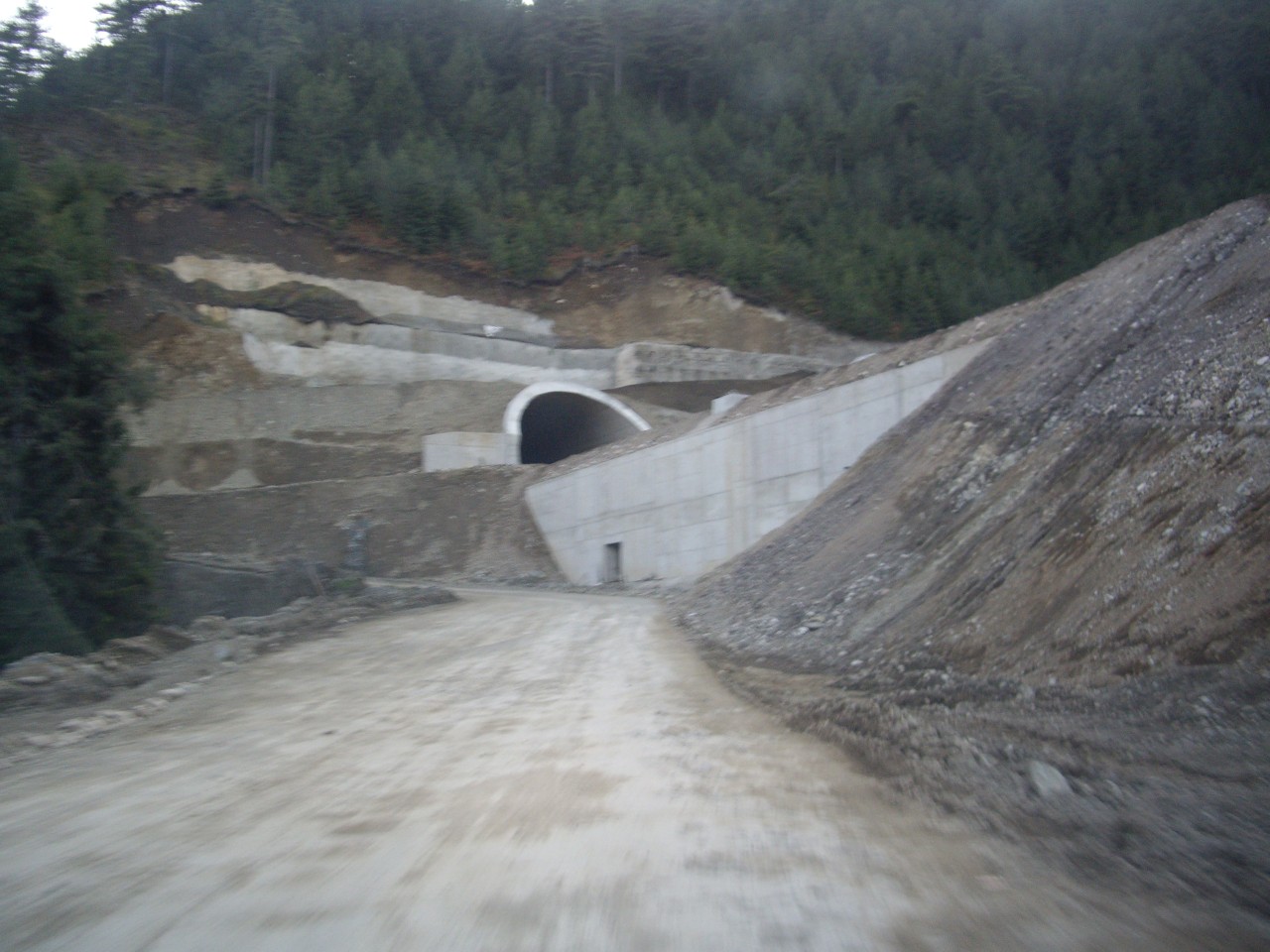
This is probably not right
It's a long way back to Athens from Meteora. There's a number of sites we wanted to hit on the way, and we hoped to make good time on the brand new highway (called the New Road, just like the one in Crete) that connected up to the main highways. This would also allow us to take a different route back. The only problem was that one of our maps said the New Road was built, and the other said it was under construction. The first map turned out to be optimistic. We drove and drove on this road, with it become less constructed all the time. Workers looked at us, but didn't say anything. Given the poor state of many of the roads we'd driven on on other days, that they might expect us to drive on this wasn't all that surprising. We ended up an hour deep into the construction site before someone finally flagged us down and made us turn back. From the map, we'd almost made it all the way through. The long, slow road we ended up taking was actually in far worse shape than the unfinished road, especially since it started raining, and the road turned to mud in some places.
|
Looks like a road |
Less like a road |
This is probably not right |
Eventually, we made it down to Patra. The unfortunate part was that the extra time this took forced us to drop out Olympia from the list of sites to visit. So instead of continuing south to Olympia, we headed east to Corinth. There, we drove up to Acrocorinth, which began as the acropolis of Corinth, and later developed into a walled castle. It is a very impressive, and historically effective fortification. It's also apparently not on the regular tourist route. There's only one small cafe, and except for a couple families, the only group that showed up while we were there was a group of schoolkids.
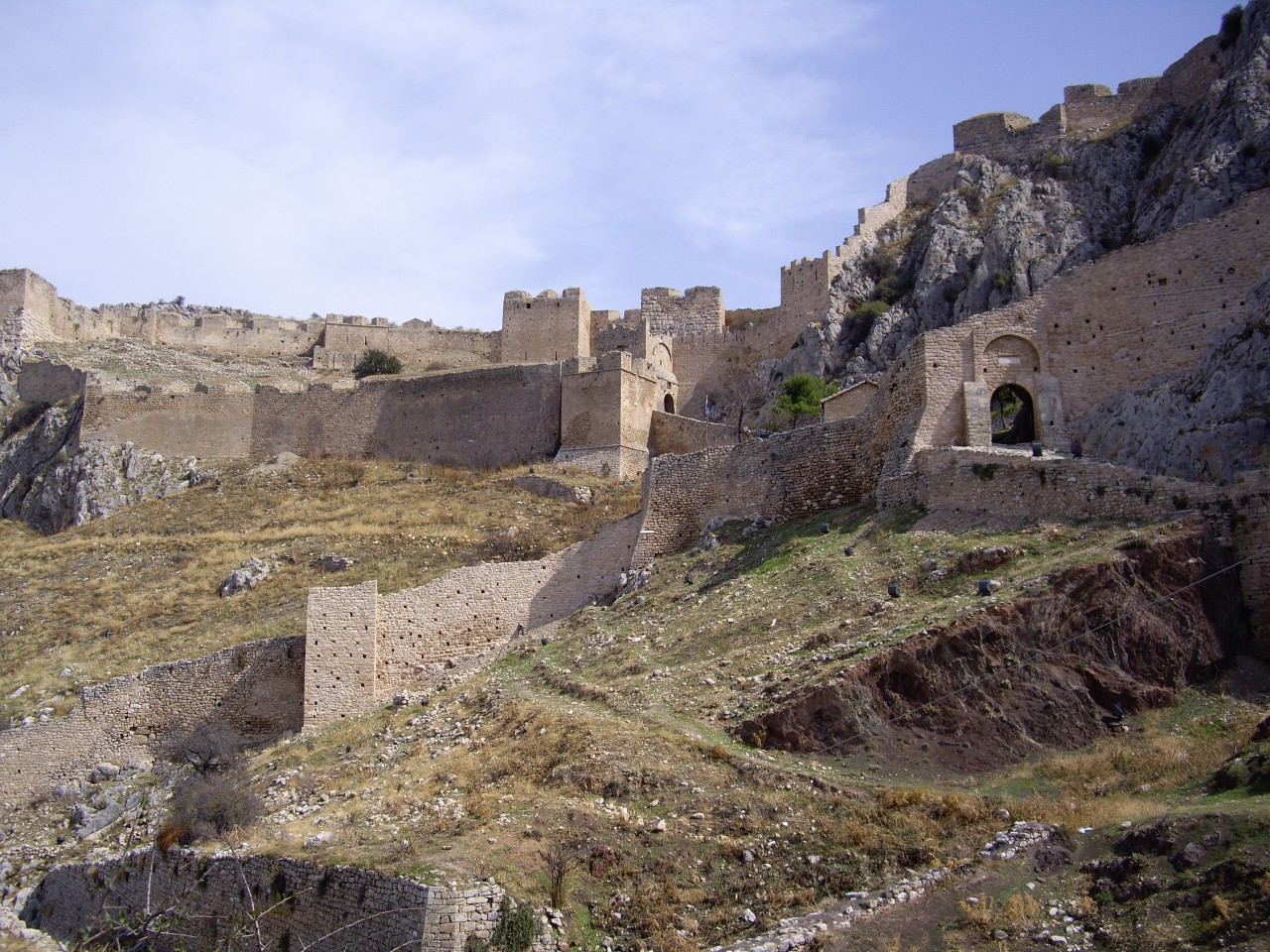 The fortress of Acrocorinth |
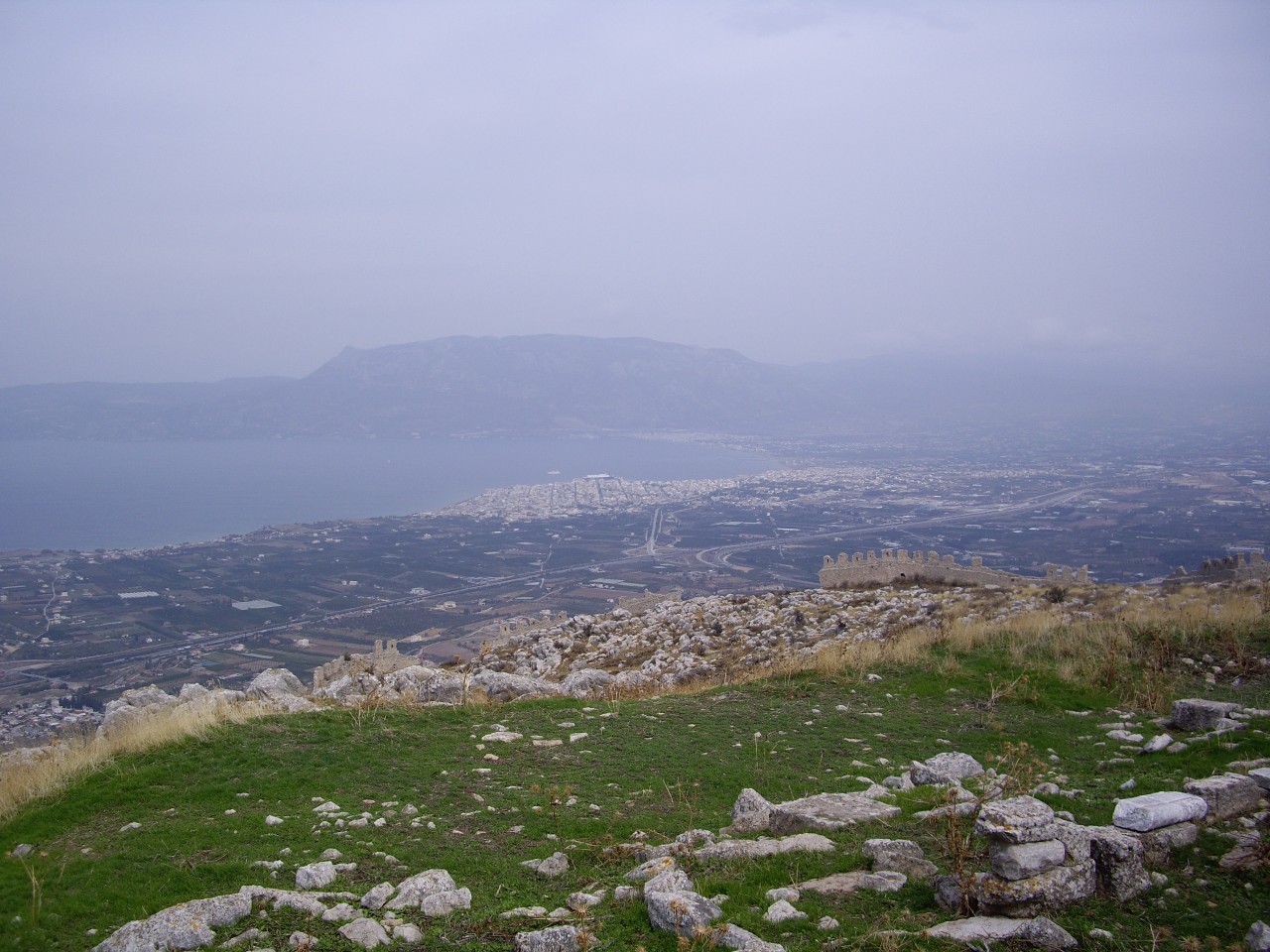 corinth, and the Bay of Corinth |
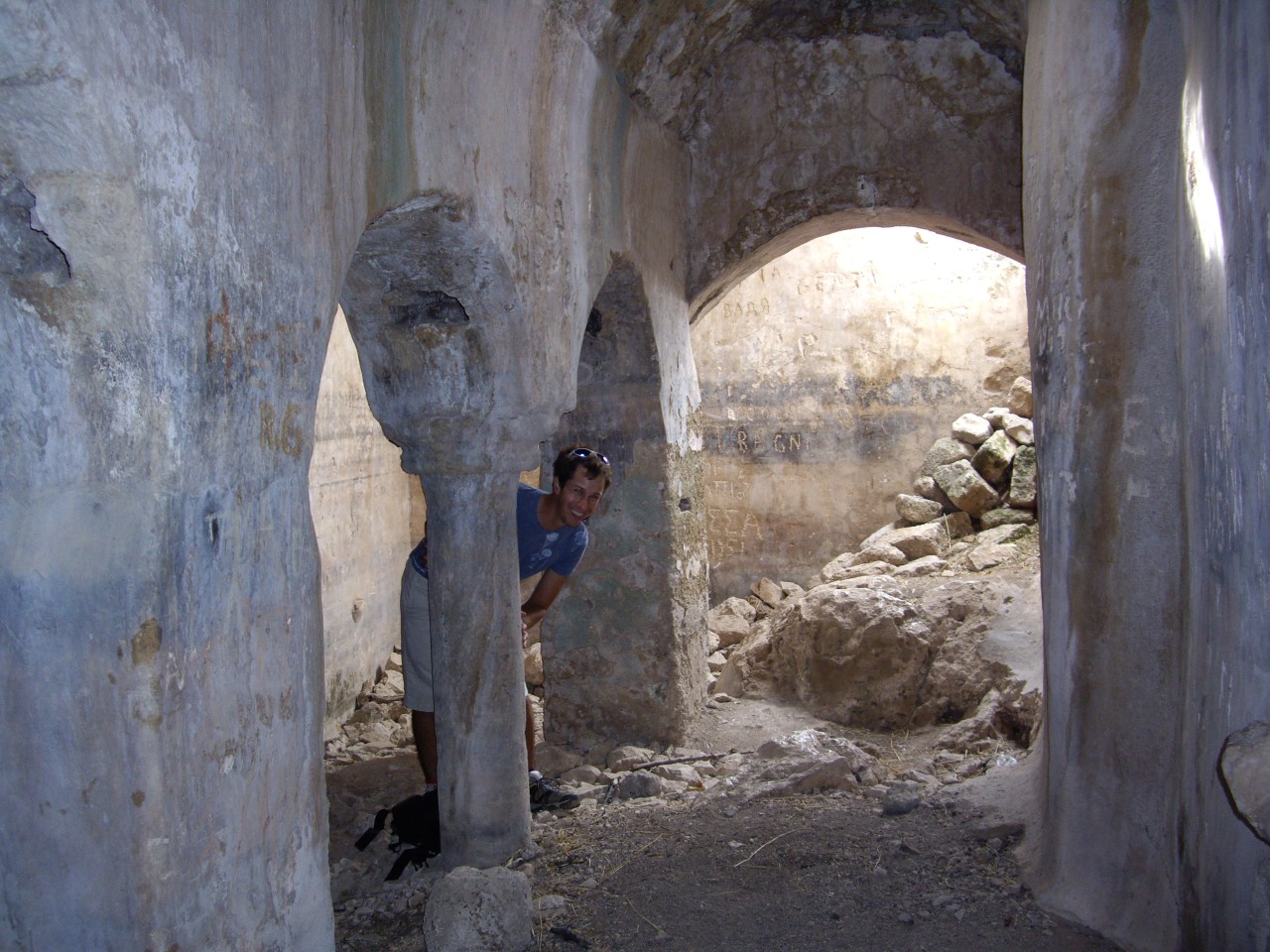 Exploring the ruins |
From Corinth, we traveled a short distance south to Mycenae, the center of the Mycenanean civilization, which co-existed with the Minoan and eventually came to dominate. Mycenae is home to the famous Lion Gate, said to be the oldest monumental sculpture in Europe (from the 13th century BC). It conceals a triangular space above the doorway lintel, which was a Mycenaean method of avoiding putting too much weight on the lintel (before we came up with the arch). Besides the ruins of the city itself, the other impressive monument on the site are the tholos tombs, the biggest of which is the "Treasury" of Atreus. It has some very impressive stones - the lintel stone over the doorway is estimated to weight 120 tons.
If you're ever in a tholos, a fun activity is to stand in the center and listen to yourself speak. There's a natural echo chamber that works only for the central person. You sound to yourself like you're mic'ed, but no one else hears anything unusual. --Danny
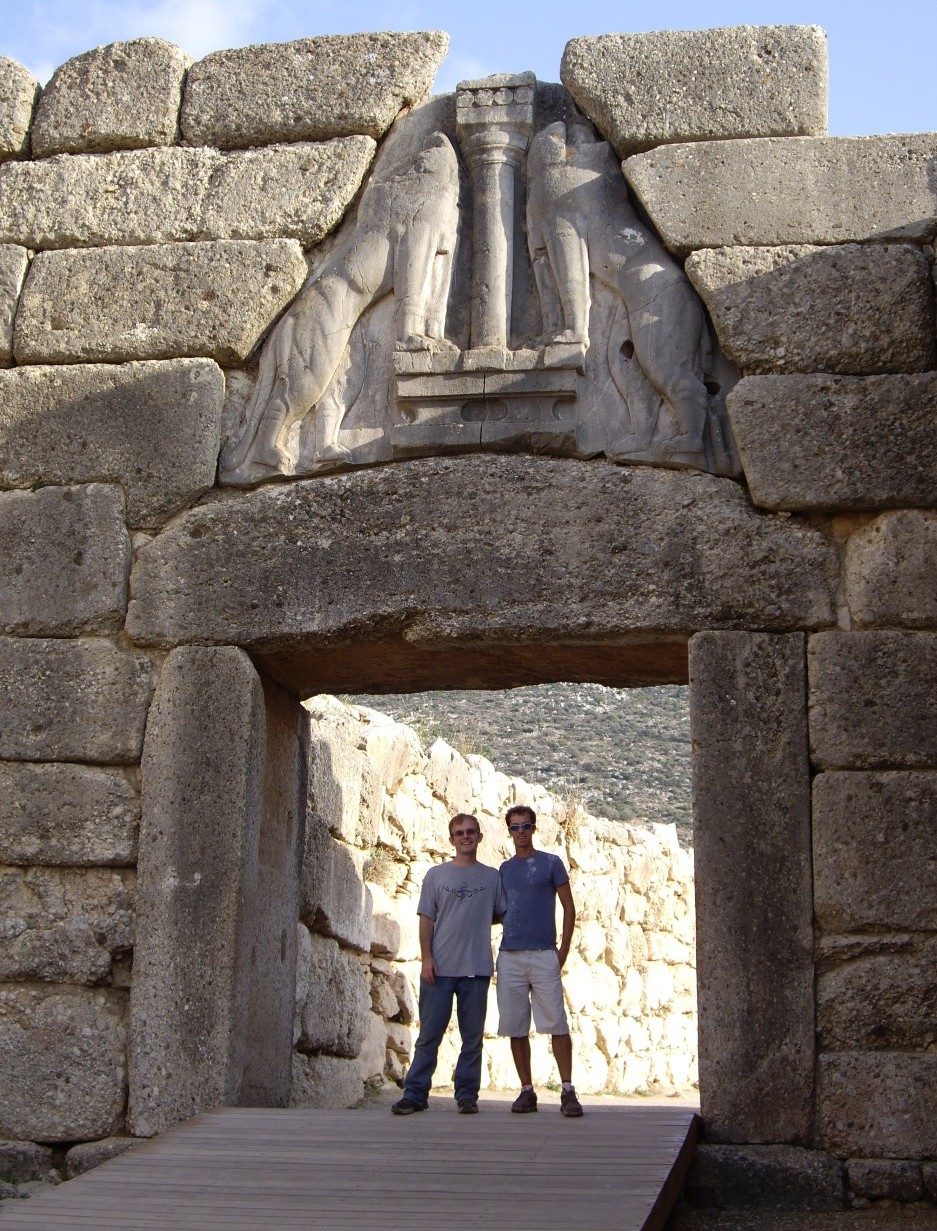 Standing at the Lion Gate of Mycenae |
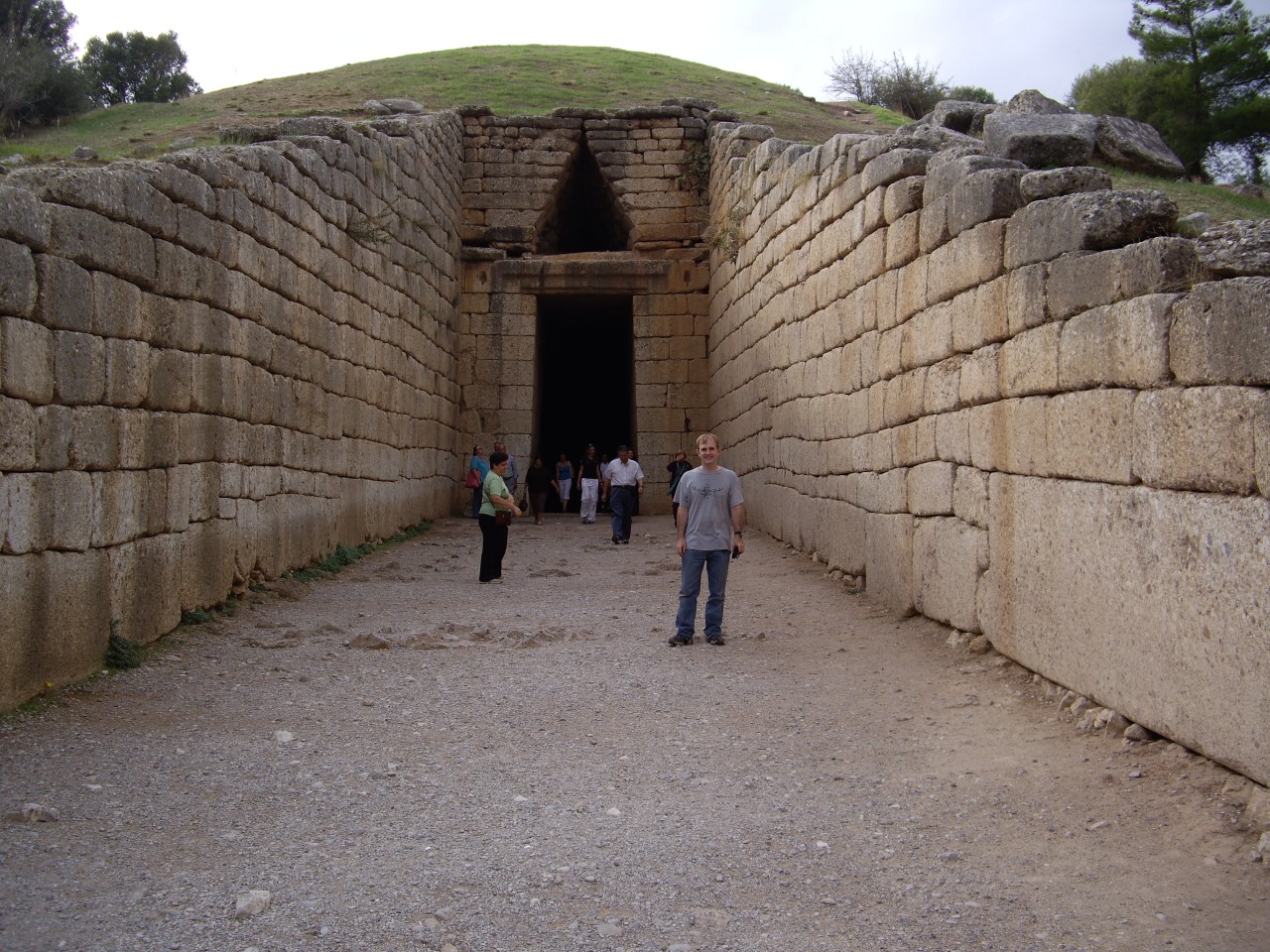 Treasury of Atreus |
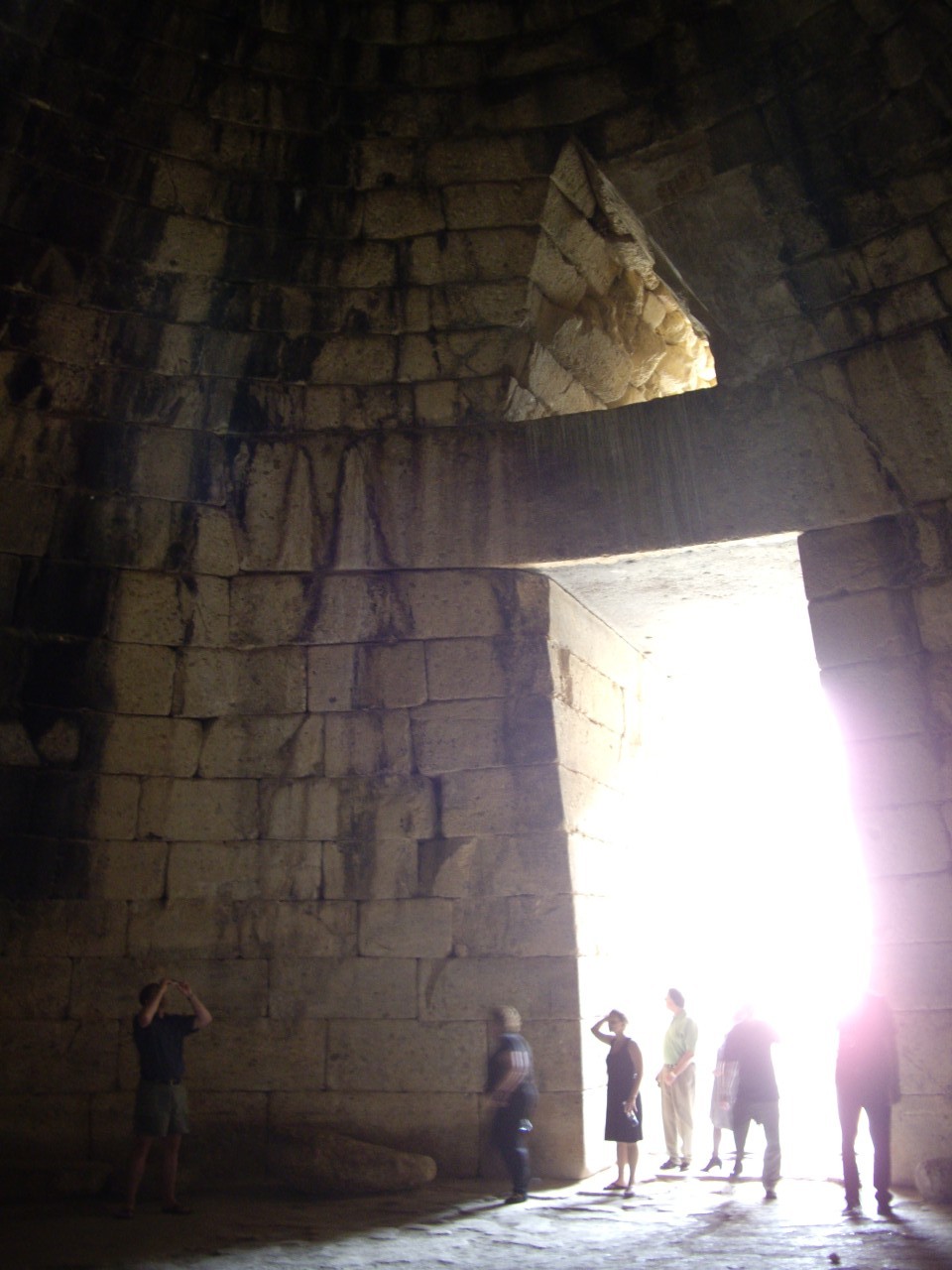 Inside the tholos |
We then continued south to Mystras, a ruined Byzantine city with a fortress on top, from approximately the same era as Meteora. We could definitely see a resemblence between the construction method of the churches here and the monasteries there. It served as the capital for the area, and is believed to be a scholastic seed point for the Italian Renaissance. It was abandoned in the 19th century, and for a time was taken over by hippies, before they were driven out so it could be restored as a tourist attraction. Only the largest and most well preserved buildings have been restored (or are in the process), the rest are buried in vegetation.
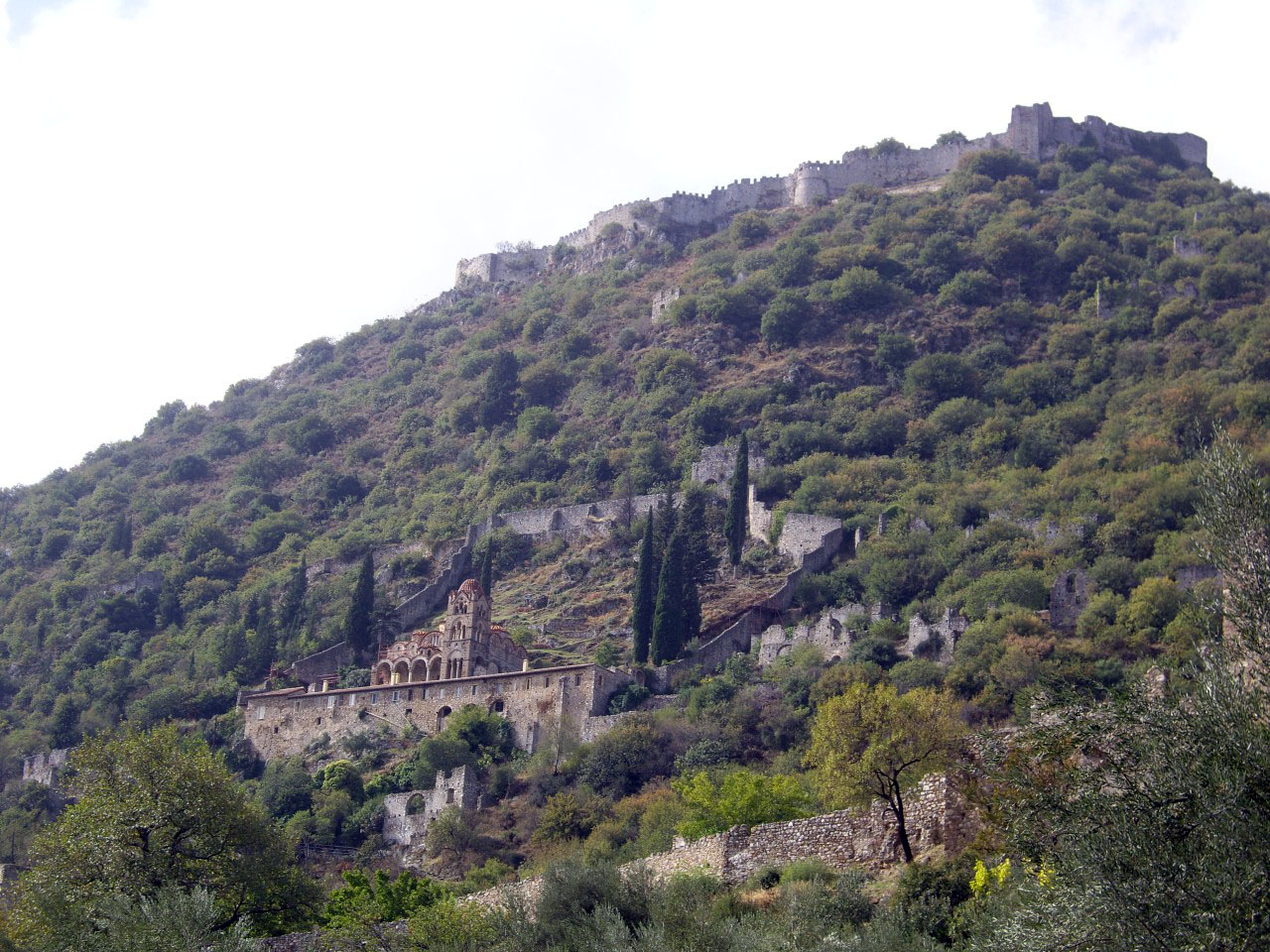 Mystras |
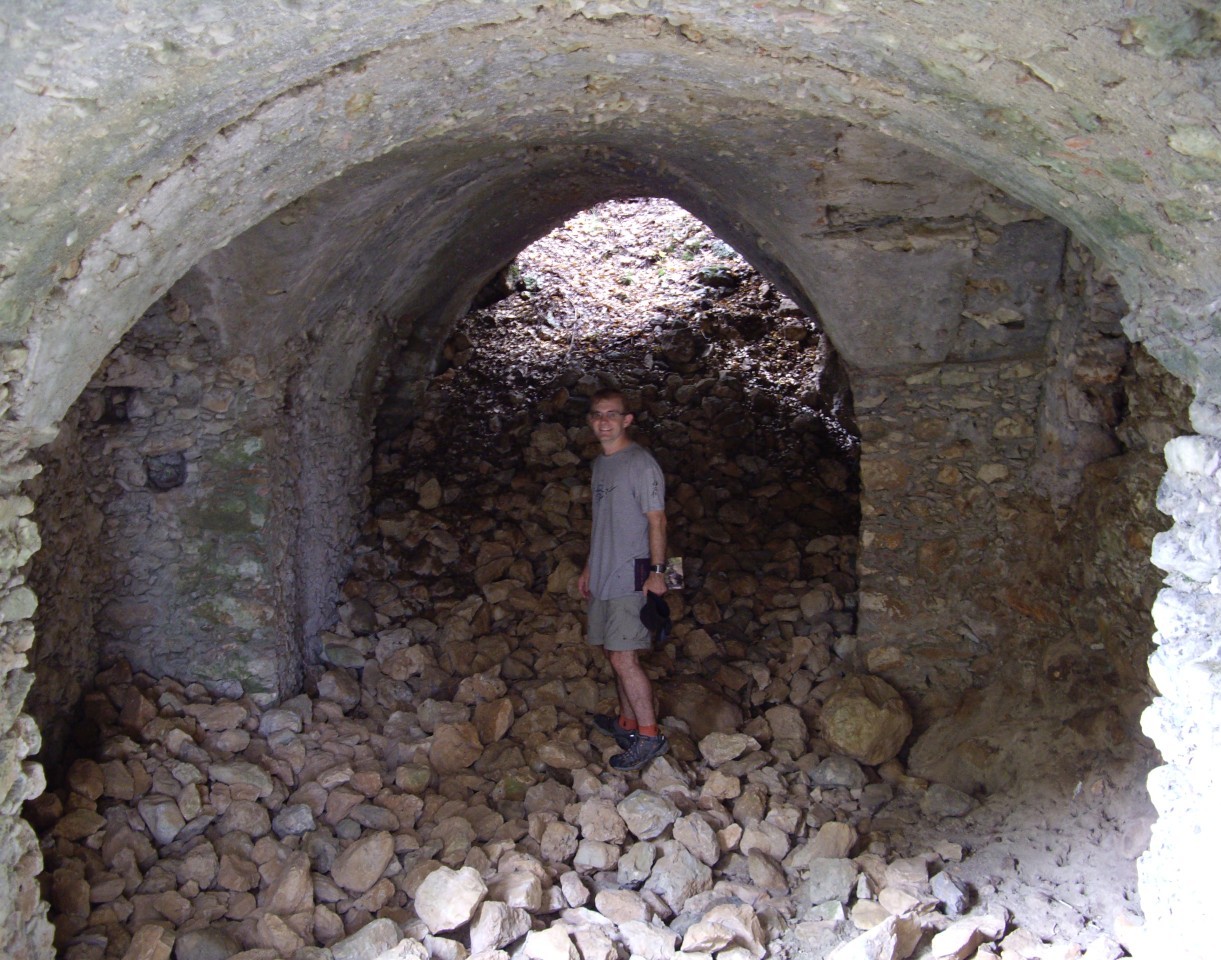 Ryan explores a ruin |
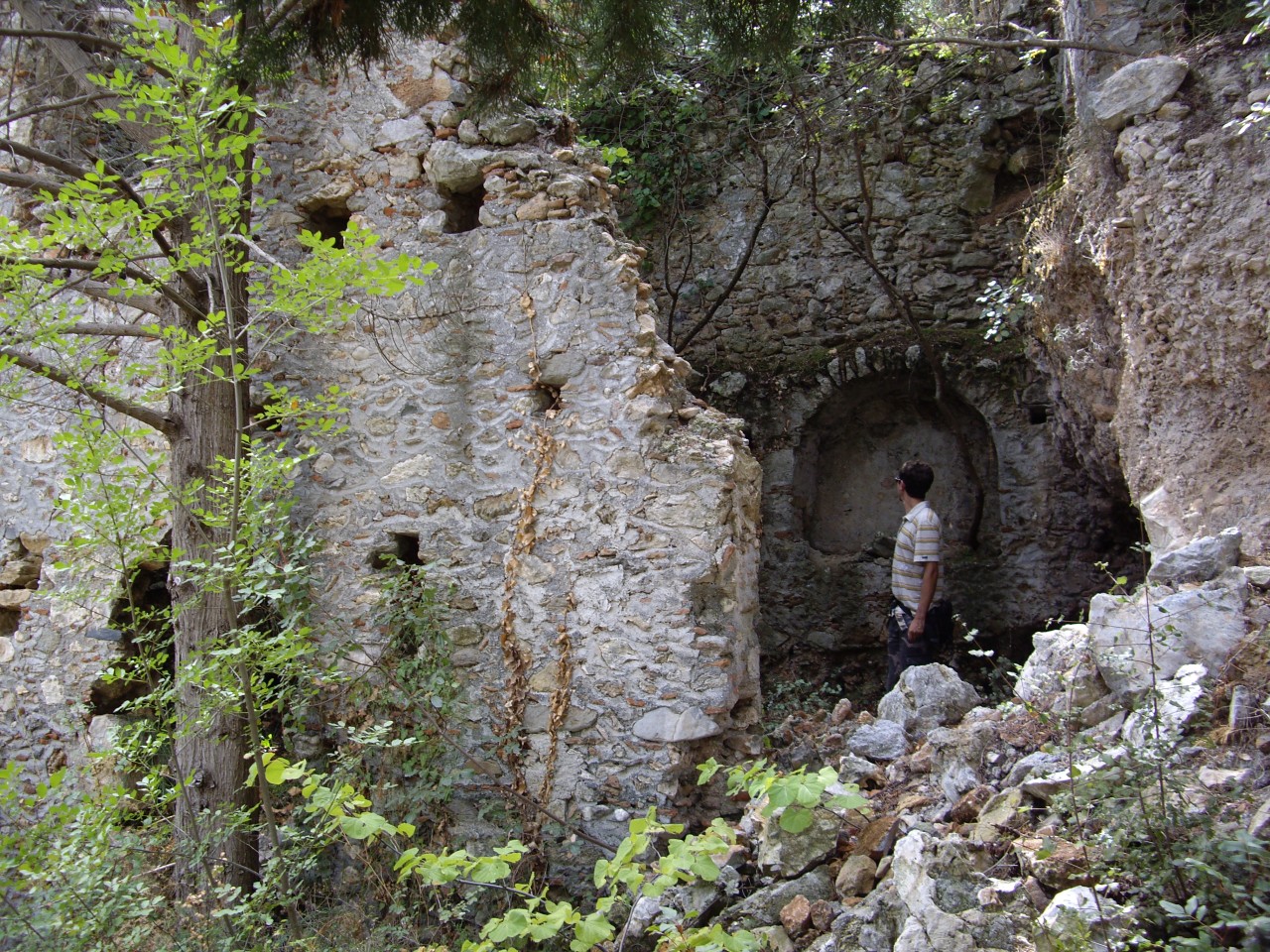 Danny explores a ruin |
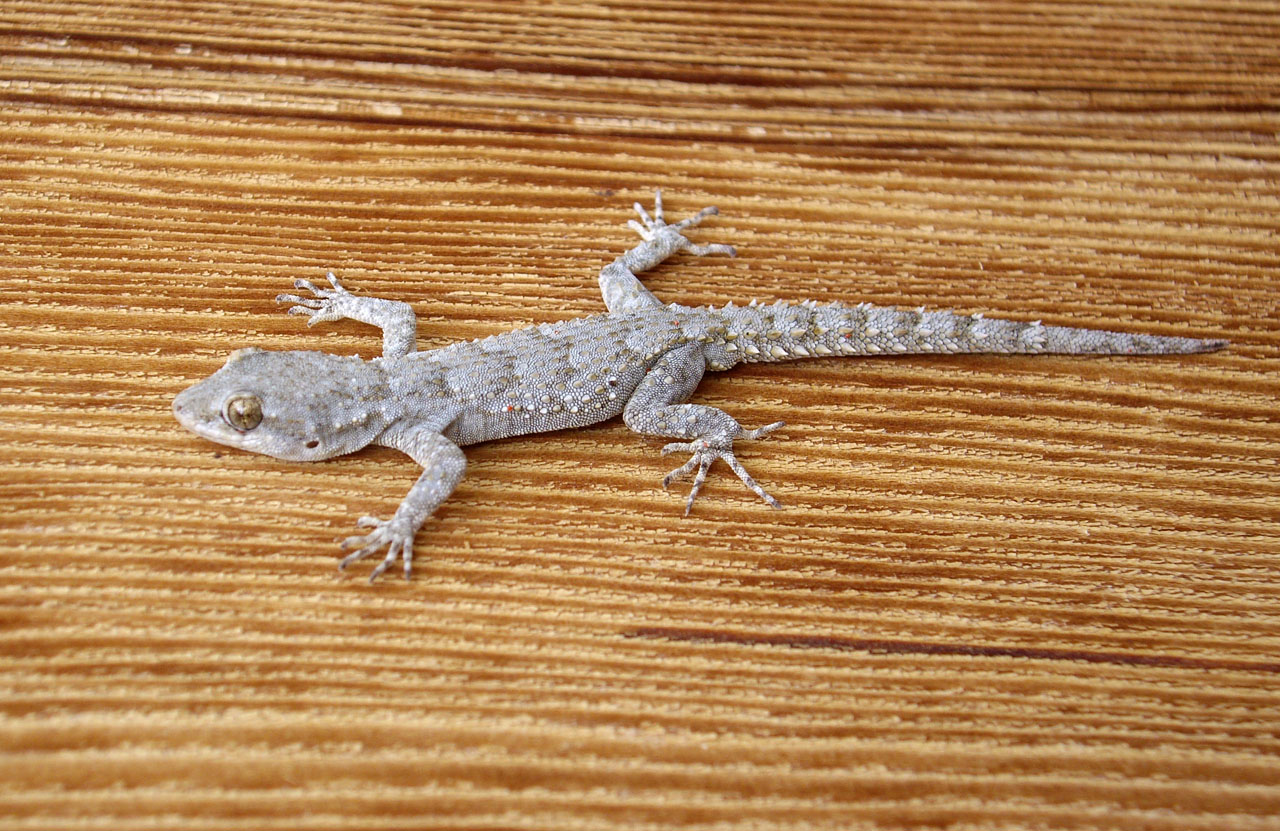 A cute lizard |
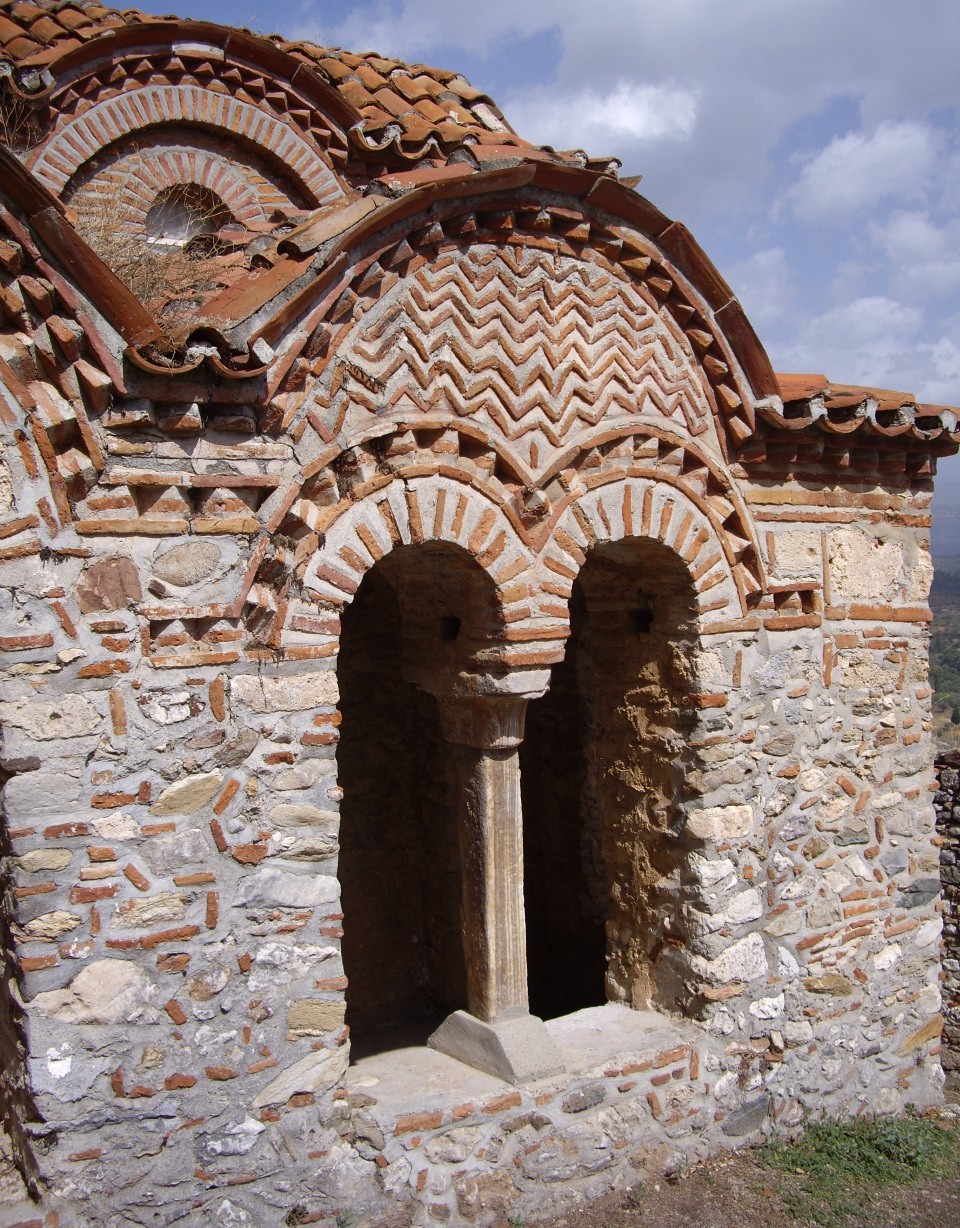 Interesting brickwork |
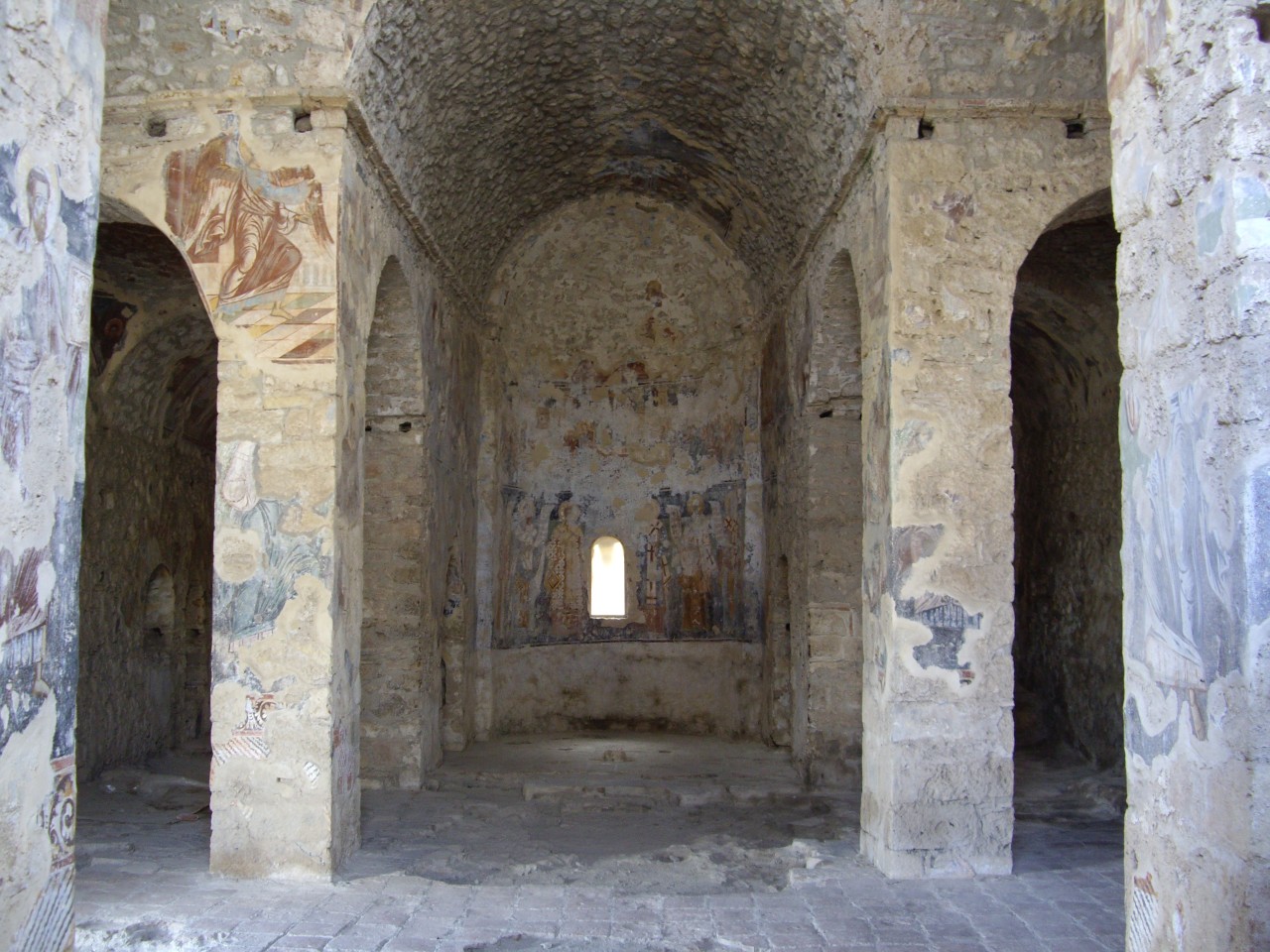 Byzantine murals in one of the churches |
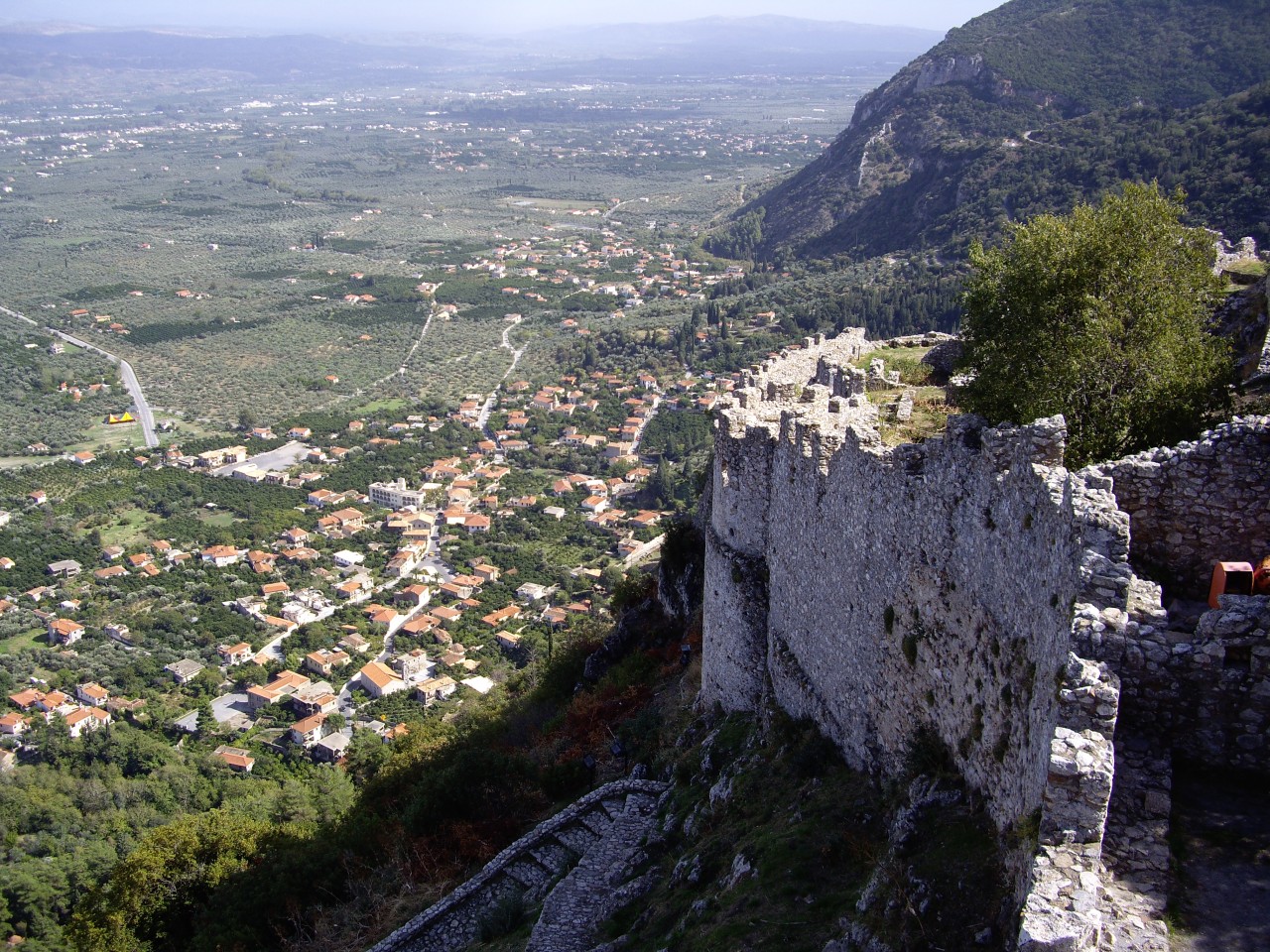 View from the hilltop fortress |
For our trip to Mycenae and Mystras, we stayed in Nafplio, a cute little resort town. There, we found a really good gelato shop, run by a very friendly Italian guy. The shop was stocked with Italian goodies, and he greeted everyone in Italian when you came in, so it was a bit like stepping across the Adriatic when you entered. He did have good gelato. We picked up a jar of sour cherries (in syrup) to give Nana if we managed to meet up with her when we got back to Athens.
The last stop before Athens was a trip to Sounion, a beautifully situated temple to Poseidon on the peninsula south of Athens. It's also a good place for a swim.
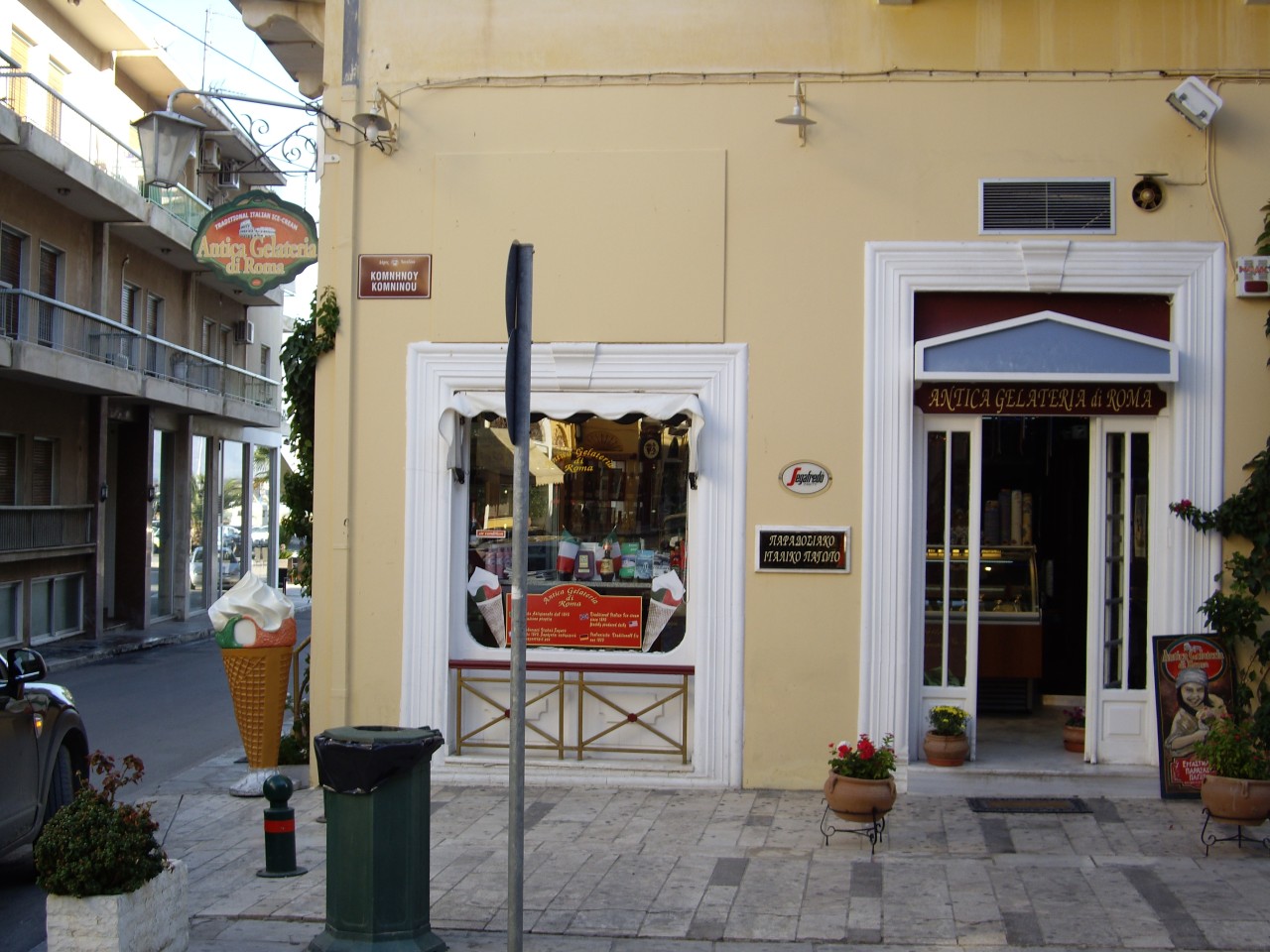 Gelateria in Nafplio |
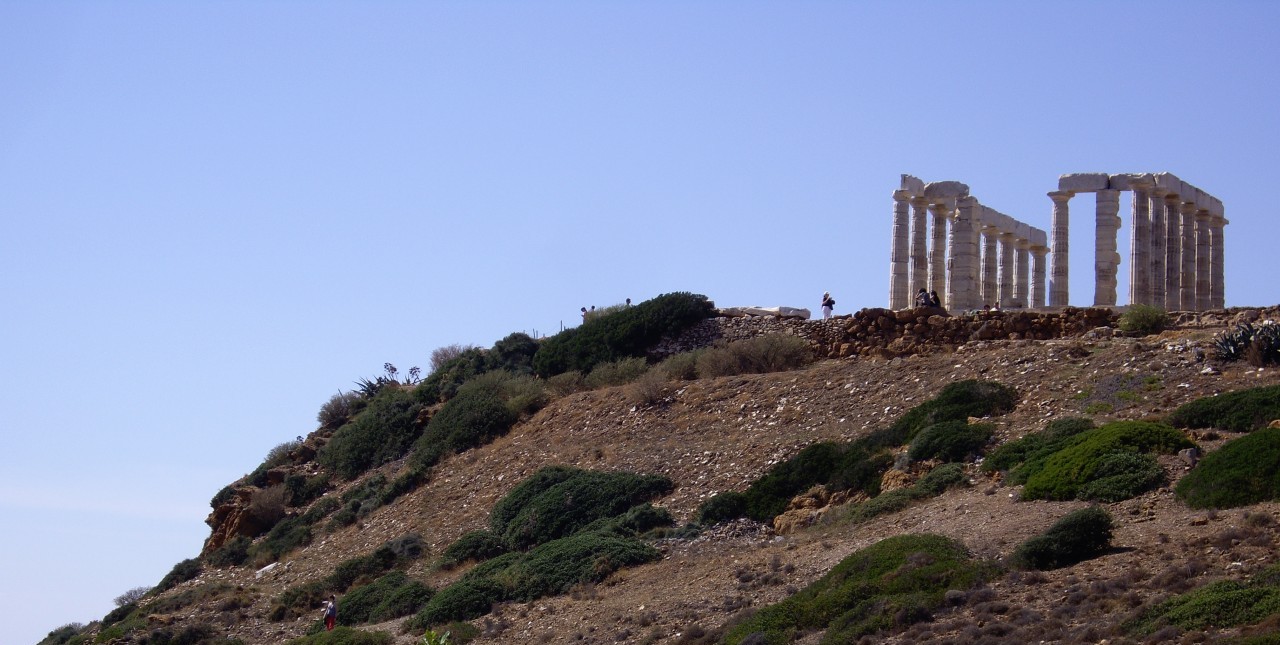 Temple to Poseidon at Sounion |
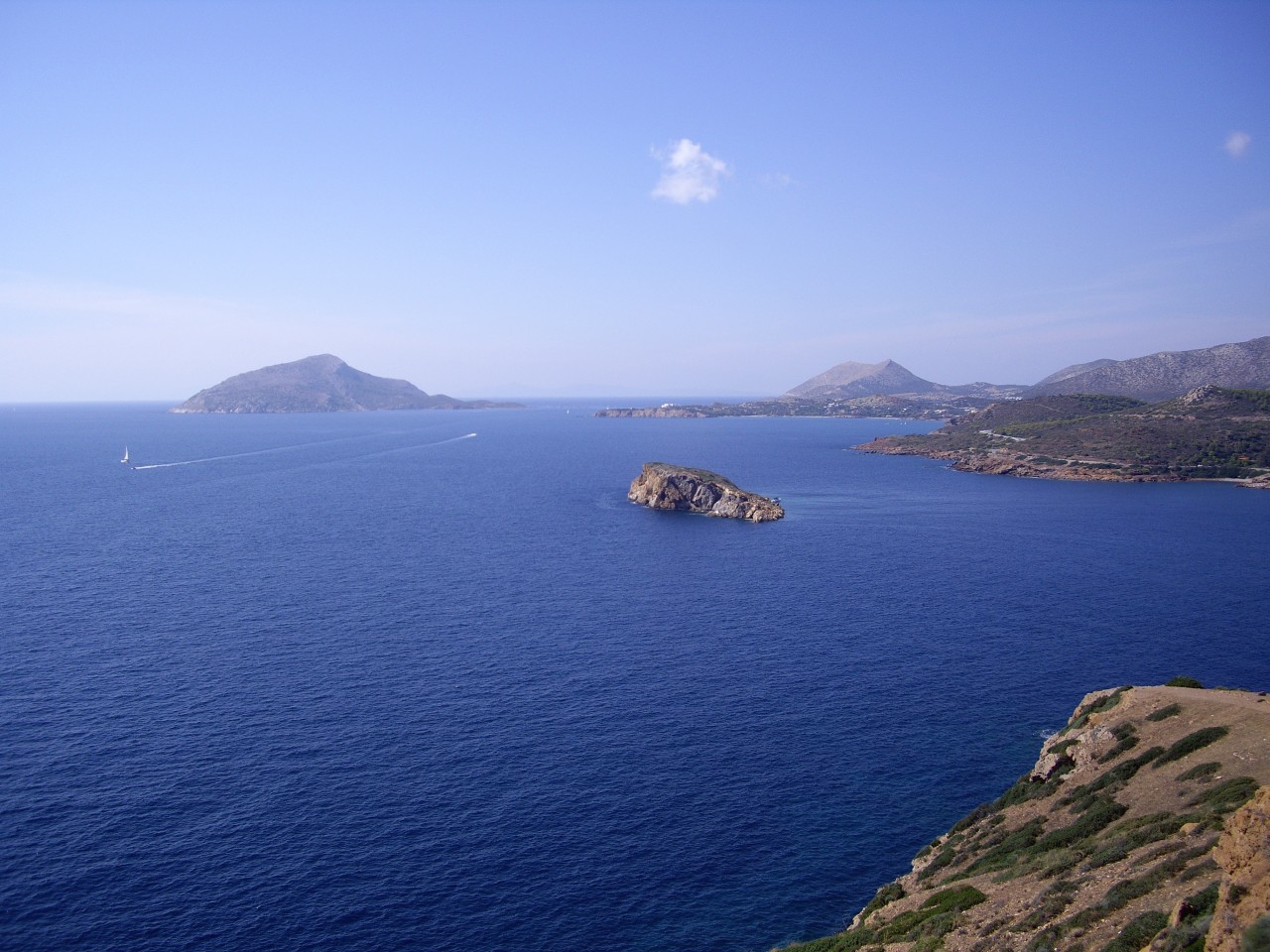 Poseidon's domain |
Finally, we were back in Athens, with just enough time to see the major sites and sample the food there. Of course, we hit the Acropolis and the Athens Muesum. Like the last time I was here, the Parthenon was still under construction. However, the museum on the Acropolis had been closed, and its treasures moved to the new Acropolis Museum at the base of the hill.
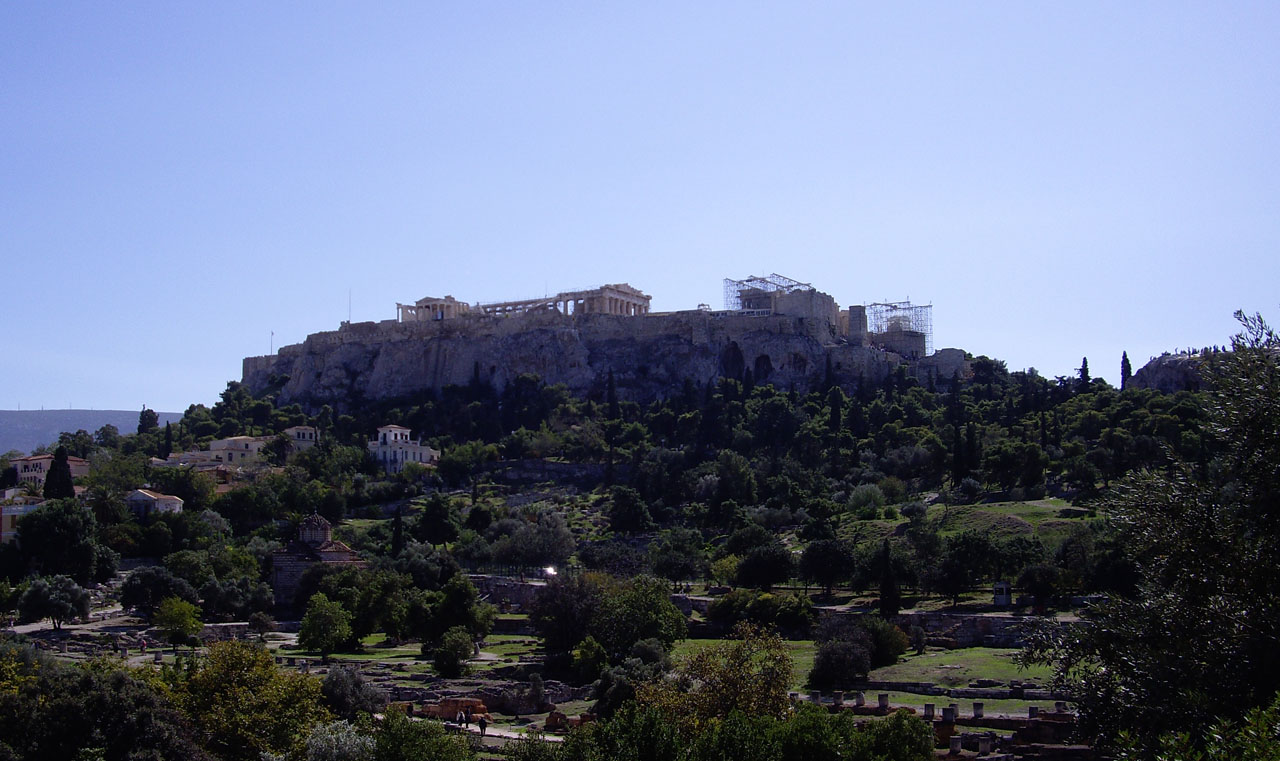 The Acropolis |
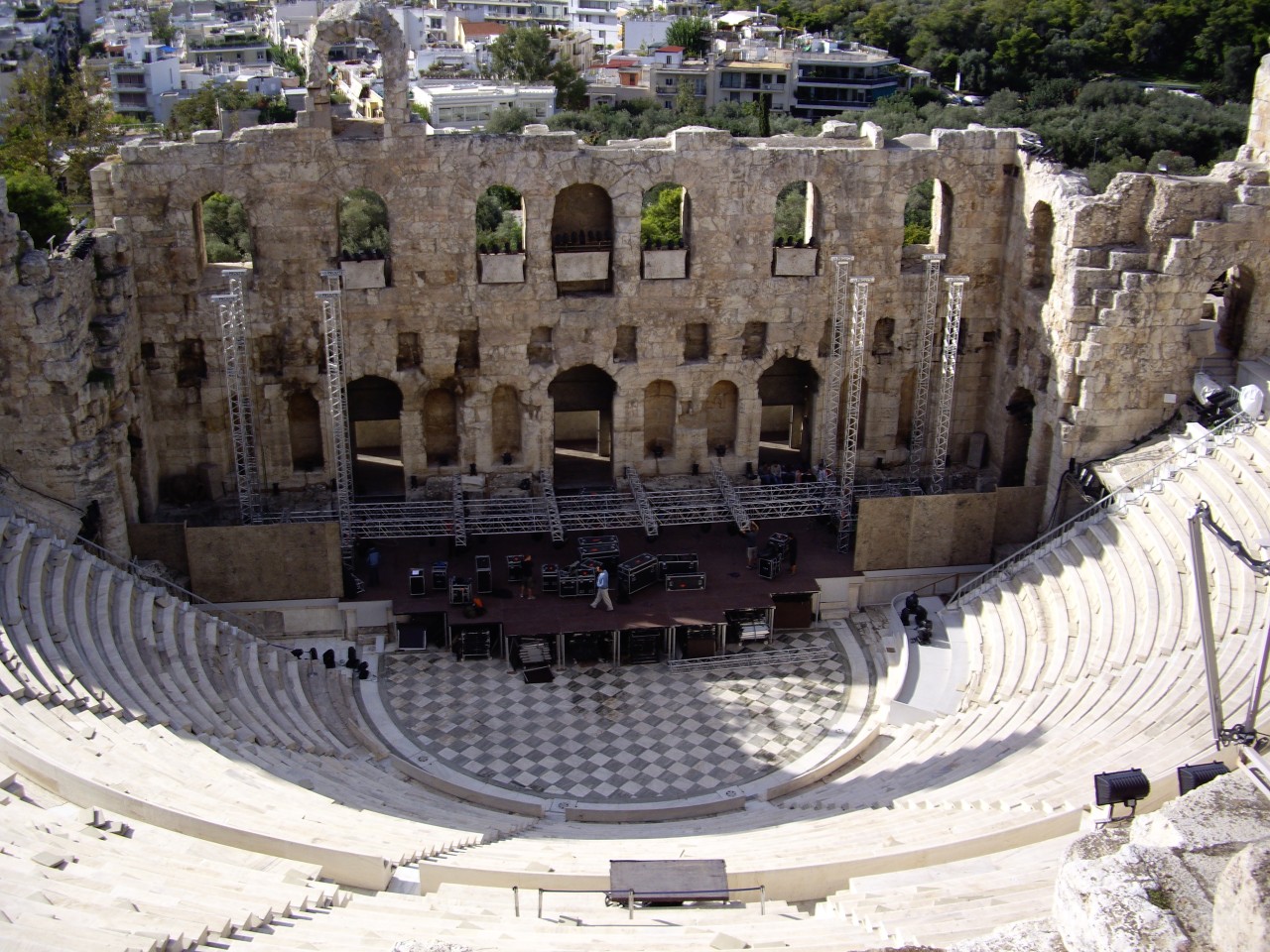 The Acropolis theatre continues to be used |
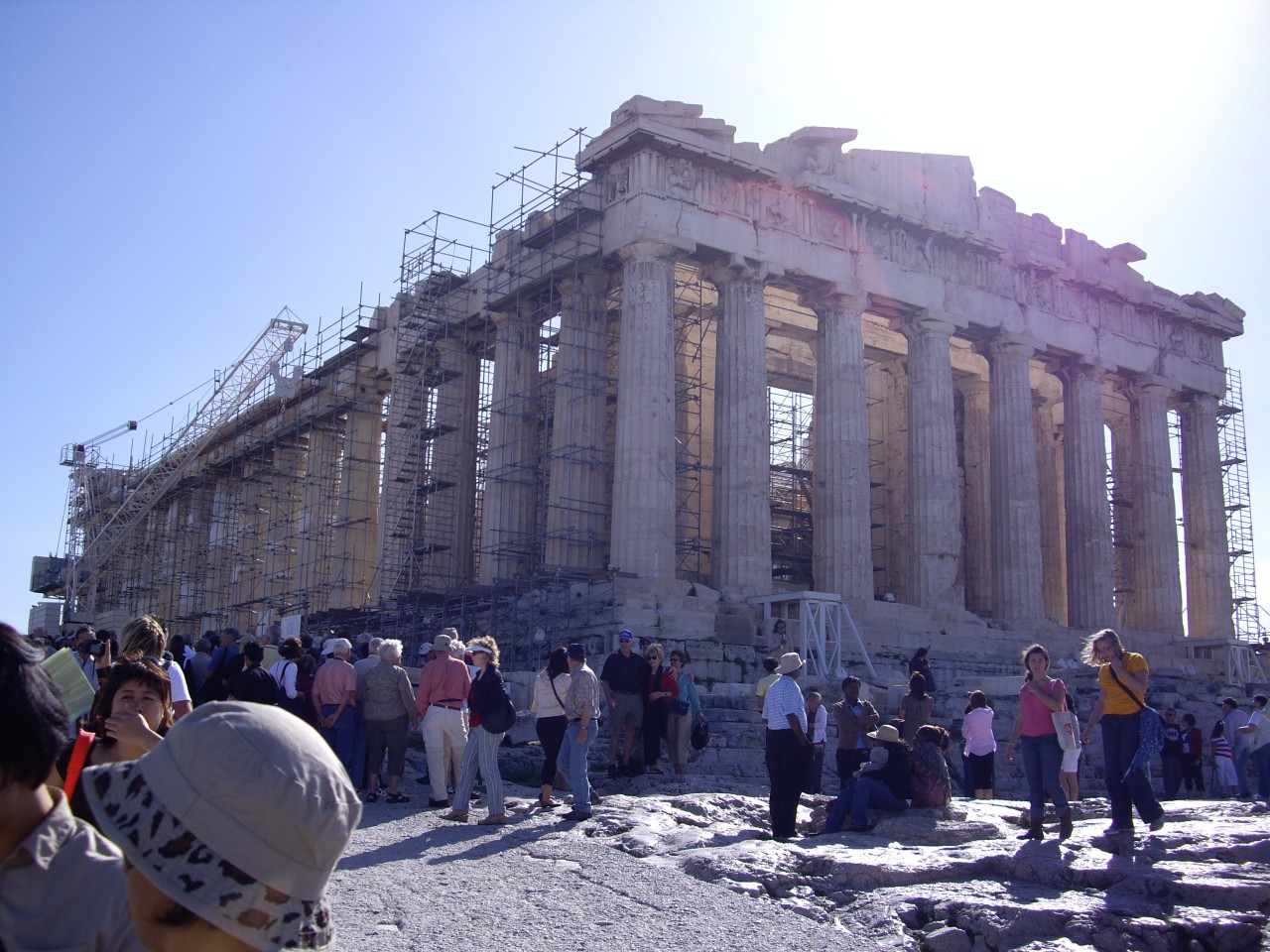 The Parthenon |
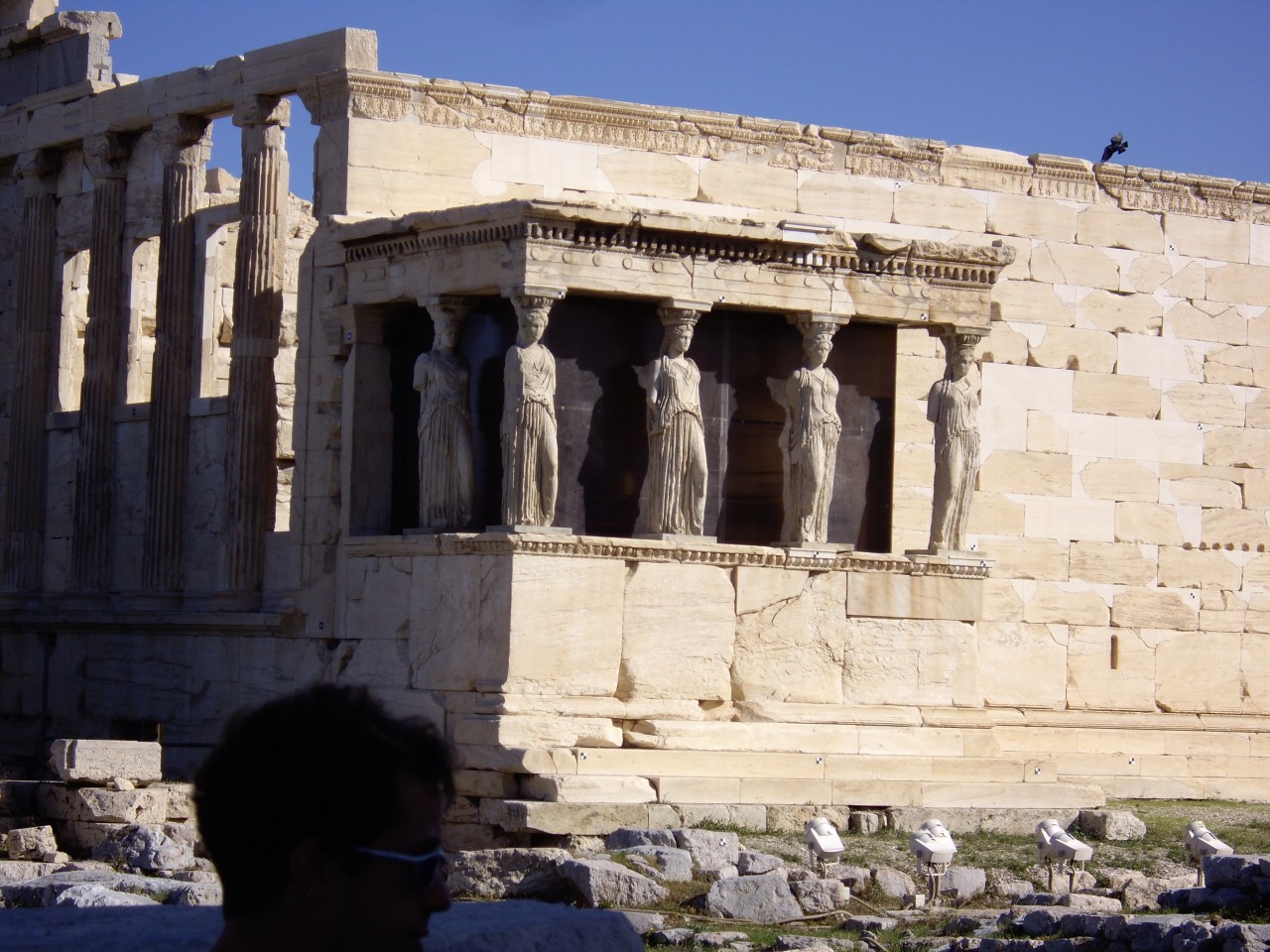 Caryatids' Porch |
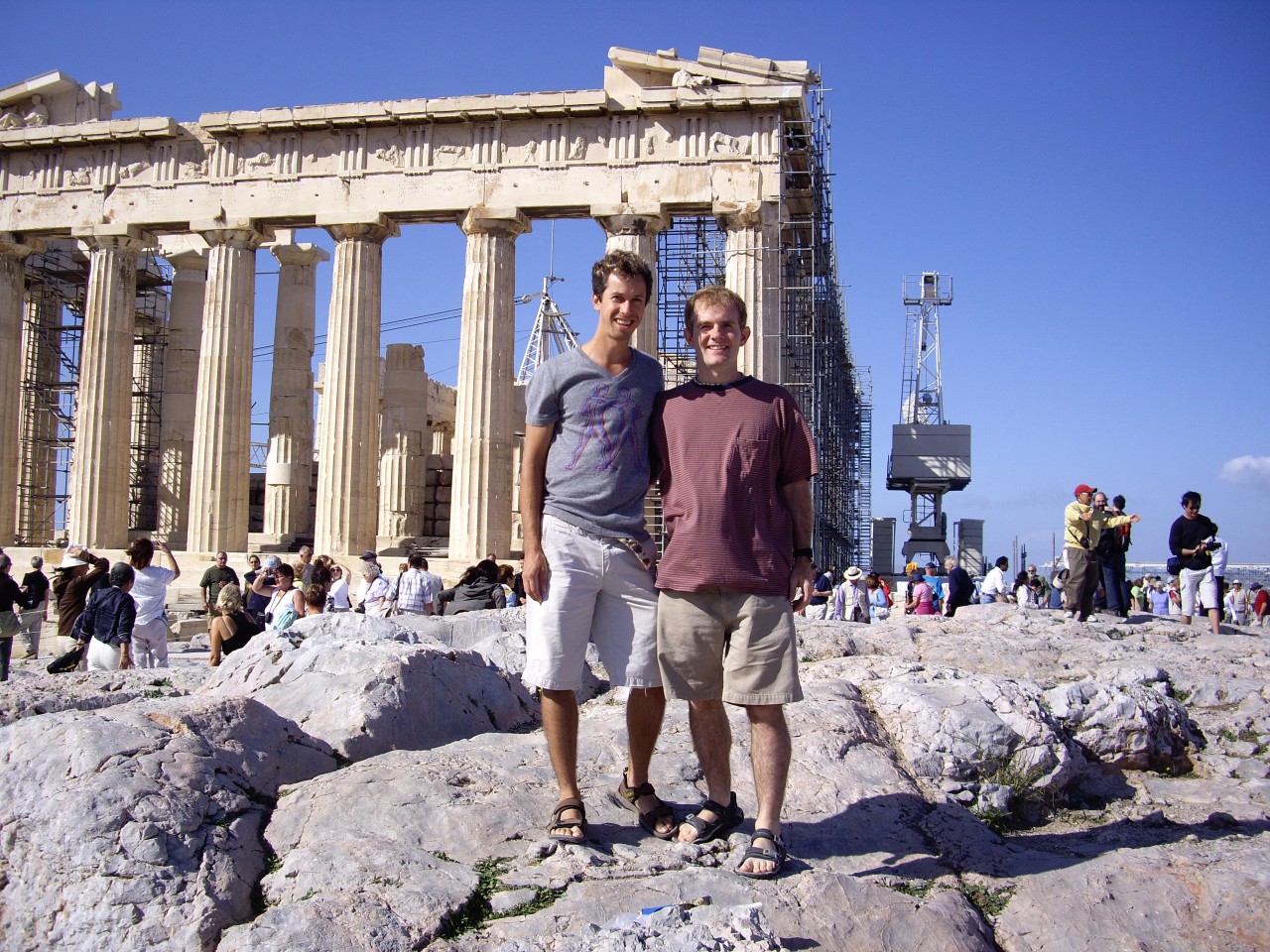 Us again |
While the new museum was being constructed, they discovered some important ruins underneath, and changed the building plan to accomodate them, complete with a huge transparent floor through which you can see the ruins and the archaeologists working on them. The floor is so large that it feels a bit like flying when you're walking over it and looking down. The top floor of the museum is oriented in the same direction as the Parthenon, and is the main part of Greece's bid to recollect the pieces of the Parthenon that are held by other museums, especially the Elgin Marbles in the British Museum. The ancient Greek treasures are a huge source of national pride (and tourism money), and the country has dramatically increased its efforts to get items repatriated through legal action and diplomatic pressure.
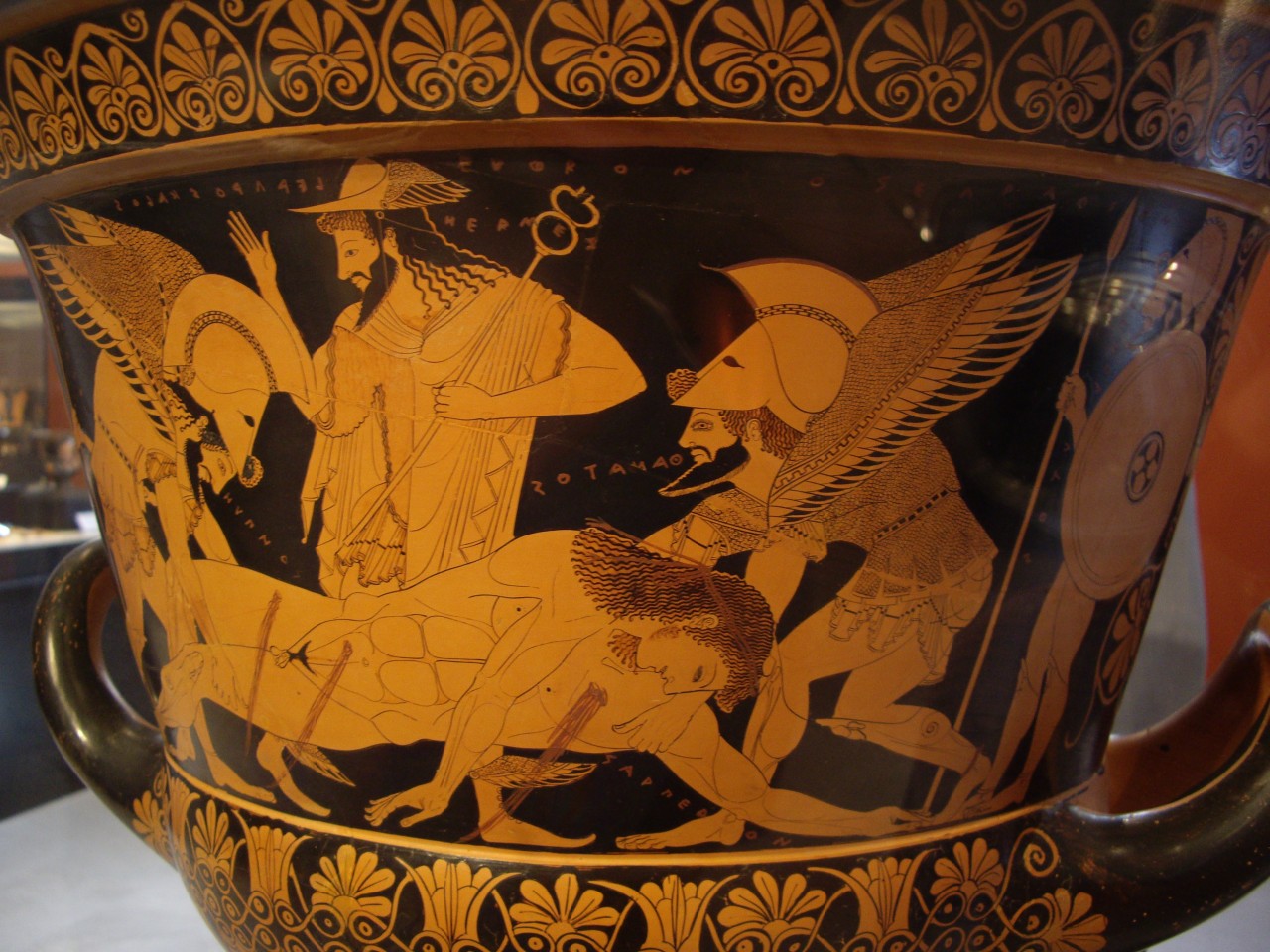 Beautiful vase |
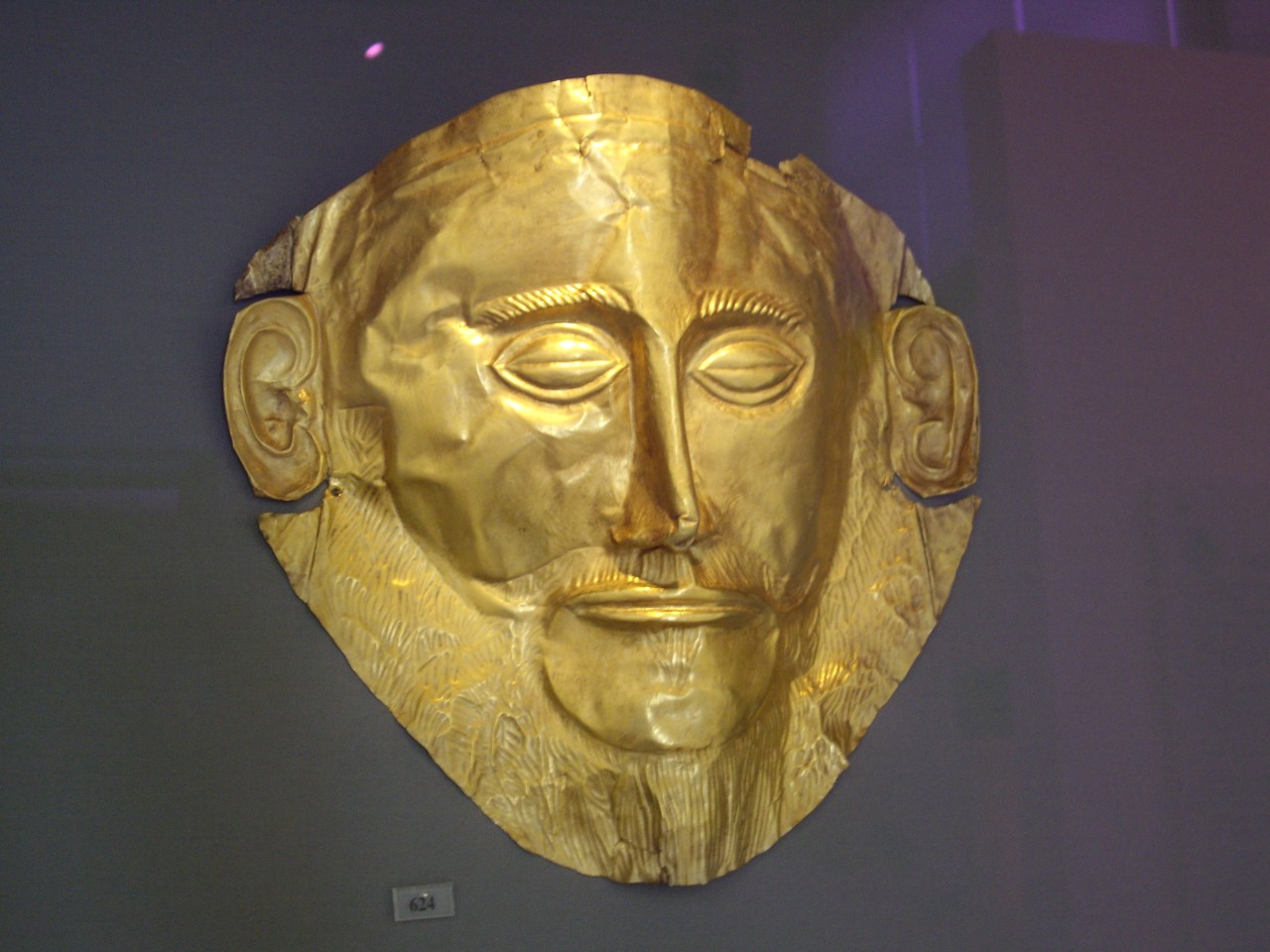 Mask of Agamemmenon |
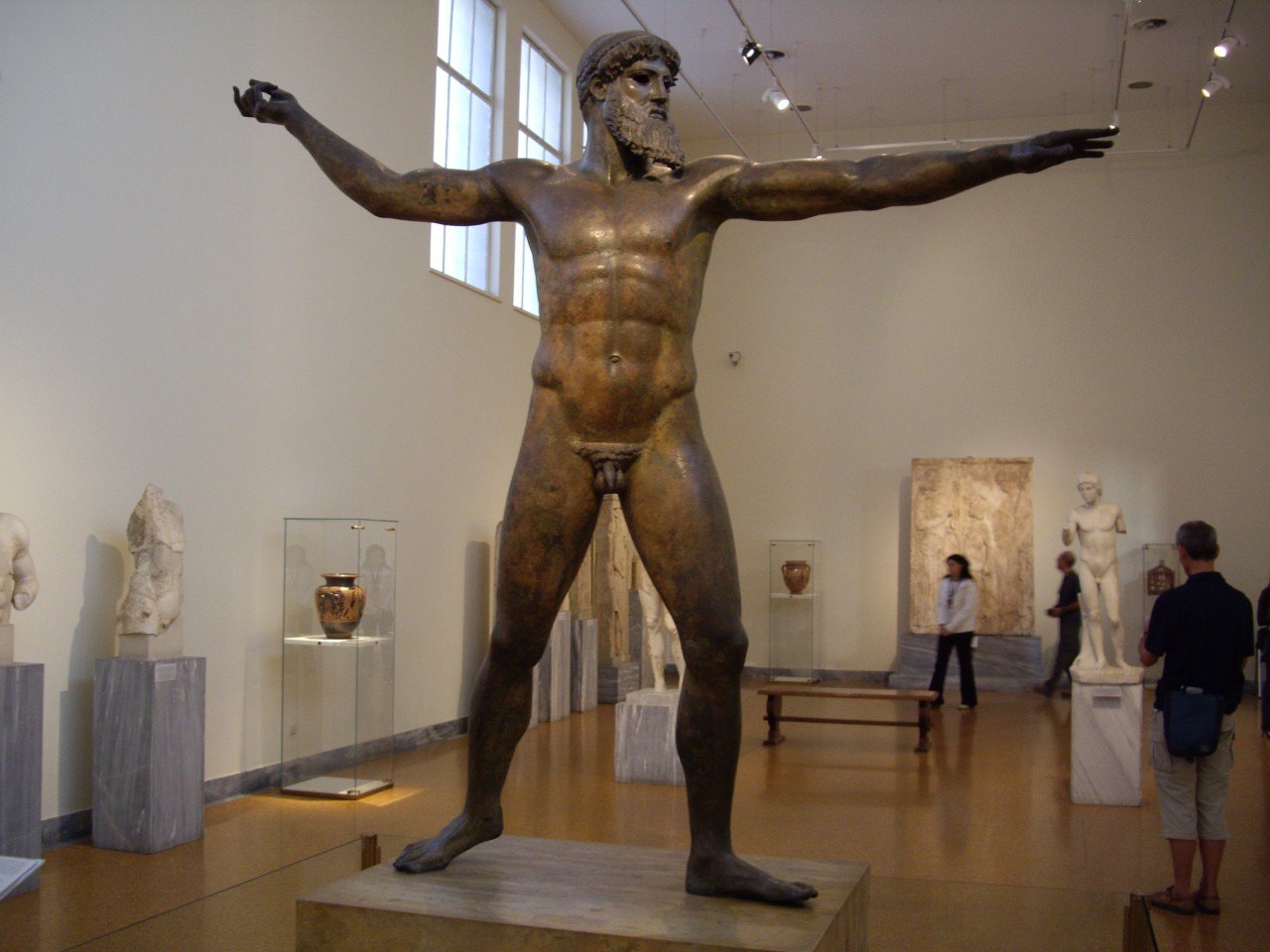 Bronze Poseidon |
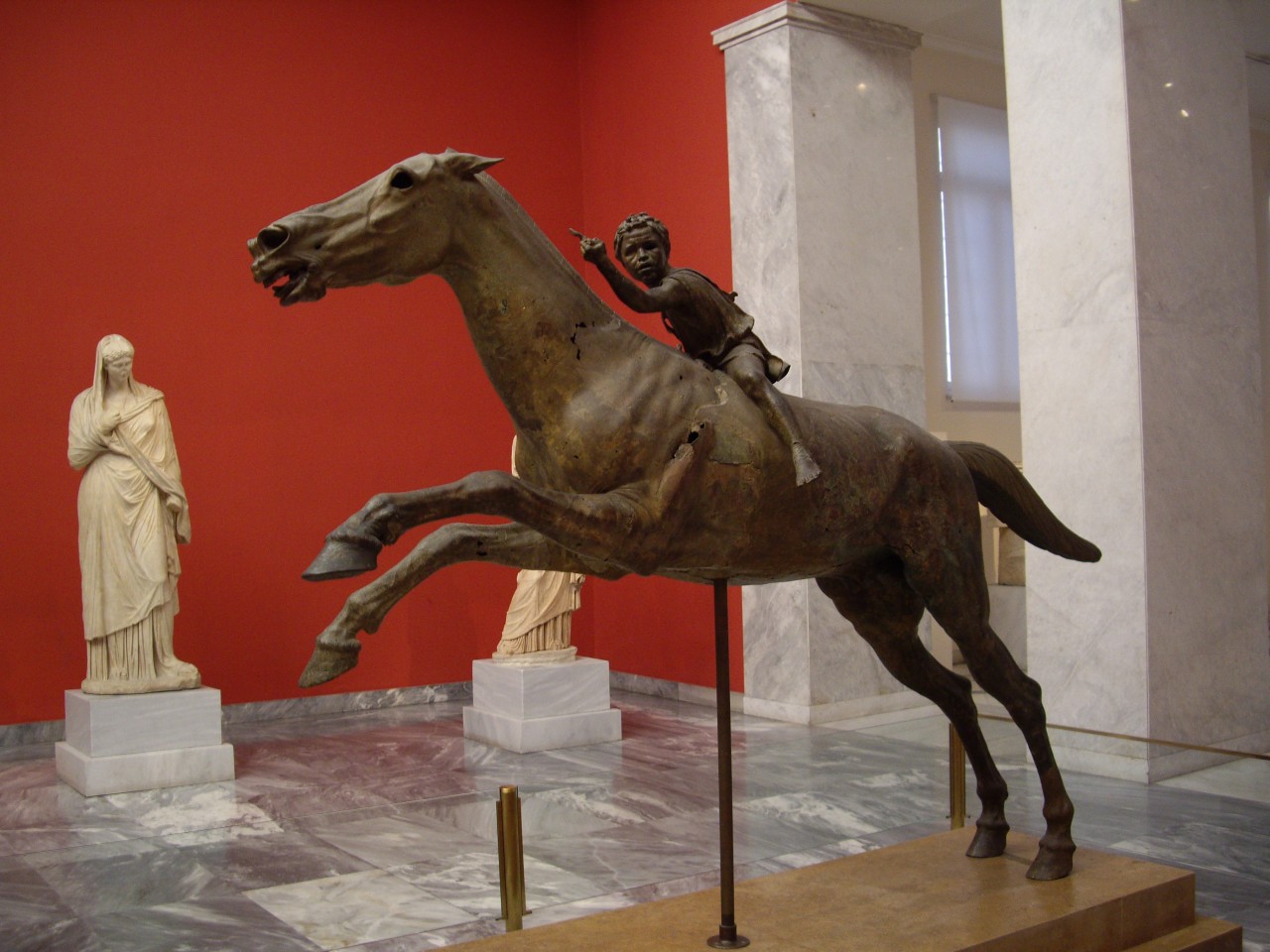 The Jockey |
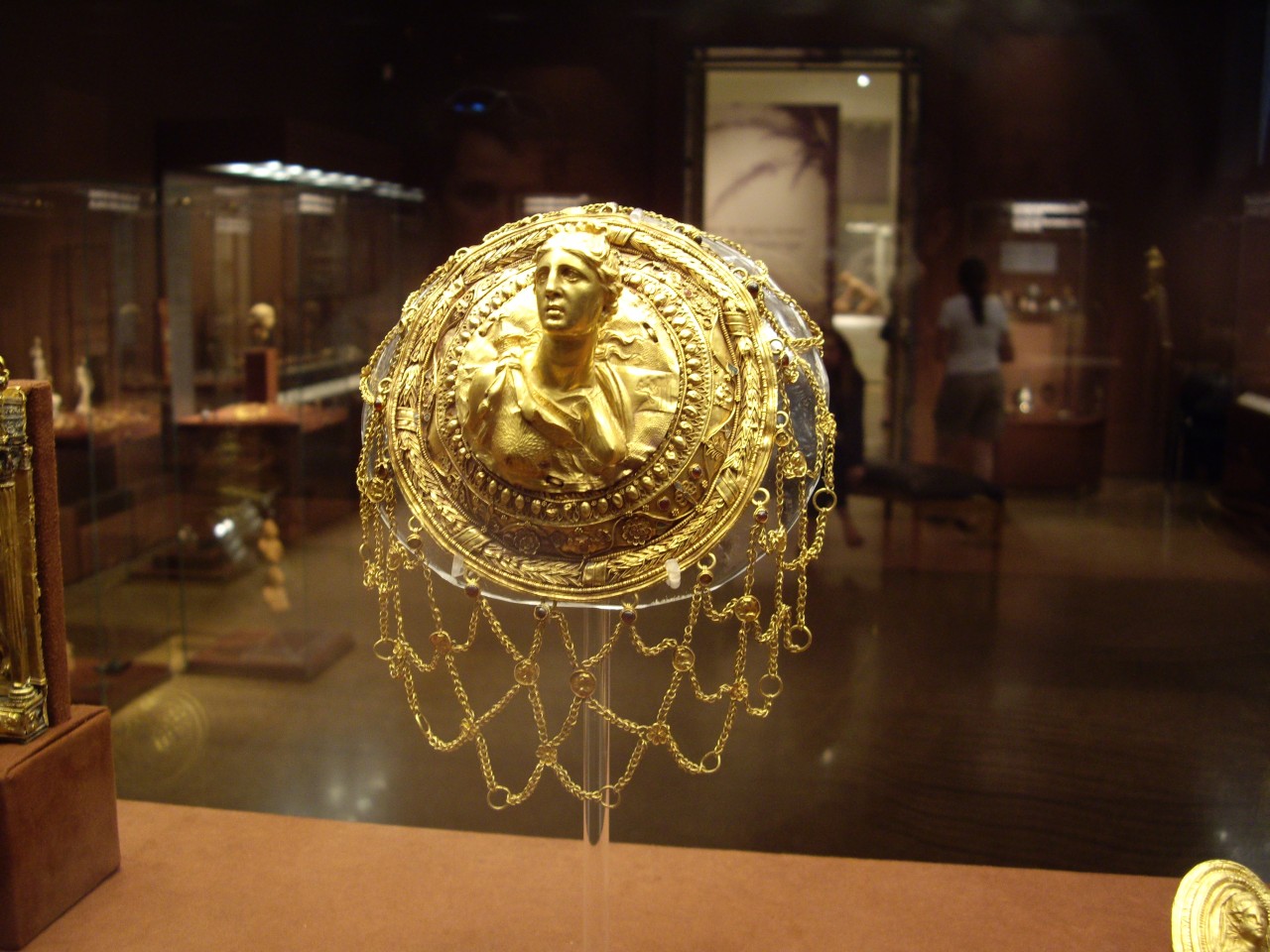 Fancy headpiece |
From the Acropolis, you get a great view of the city, including the massive Temple to Zeus, with its 55 foot high columns. Another great sight is the Temple of Hephaestus, which is the best preserved ancient Greek temple on the continent. With our new last name, it was a must-visit. Idryo means to create, to establish, or to forge. Hephaestus was the god of the blacksmiths.
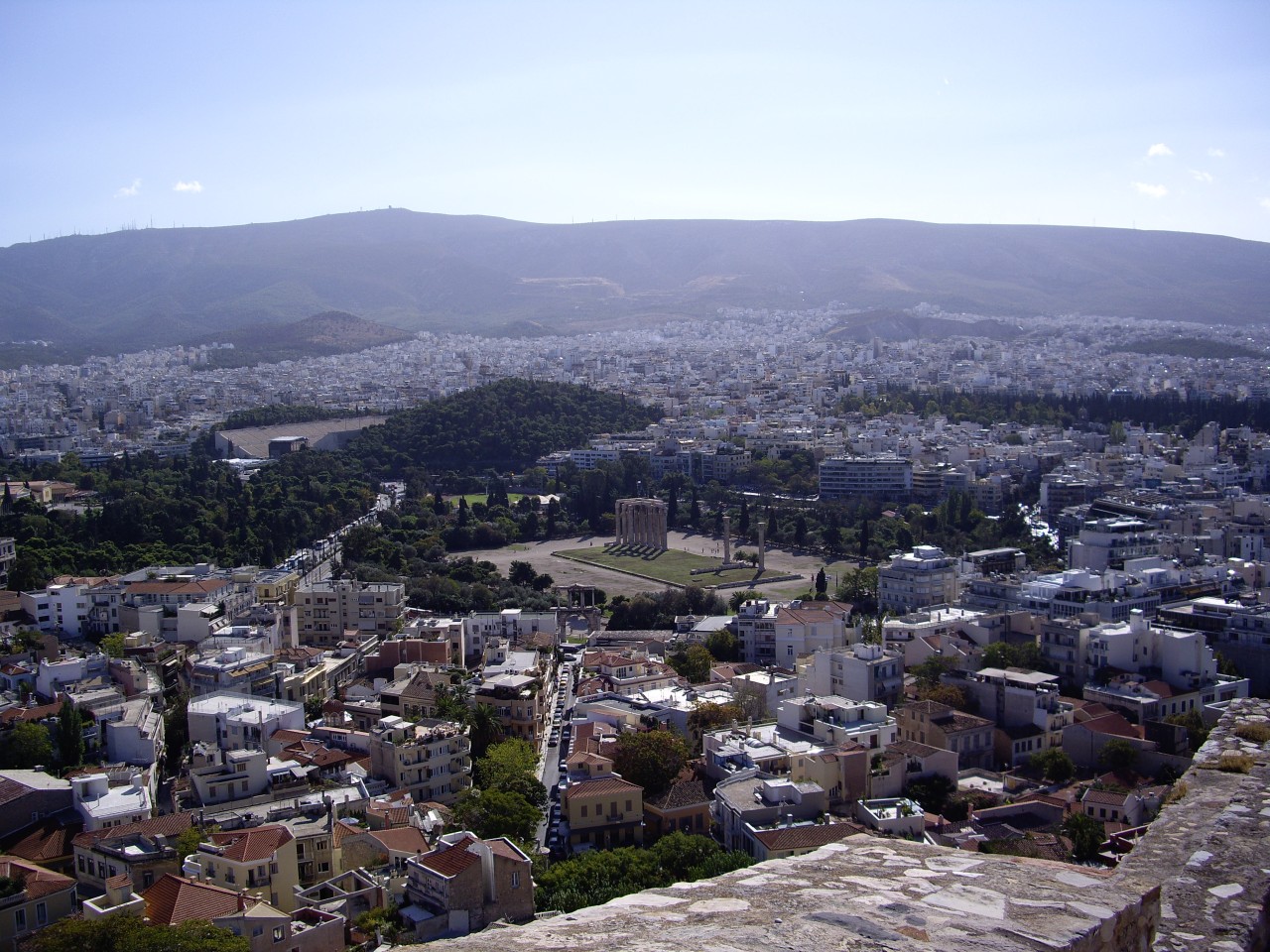 Temple of Olympian Zeus |
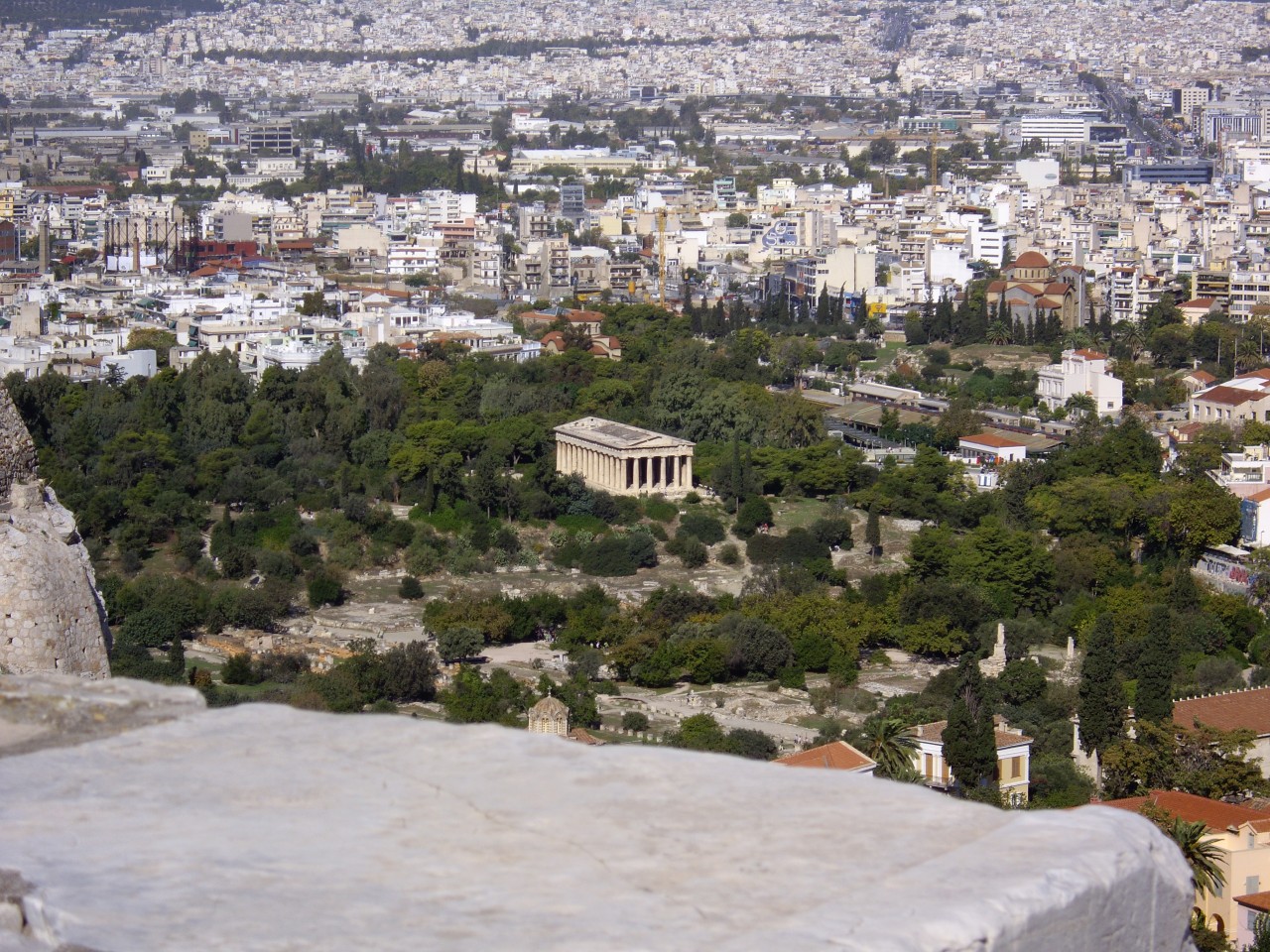 Temple of Hephaestus |
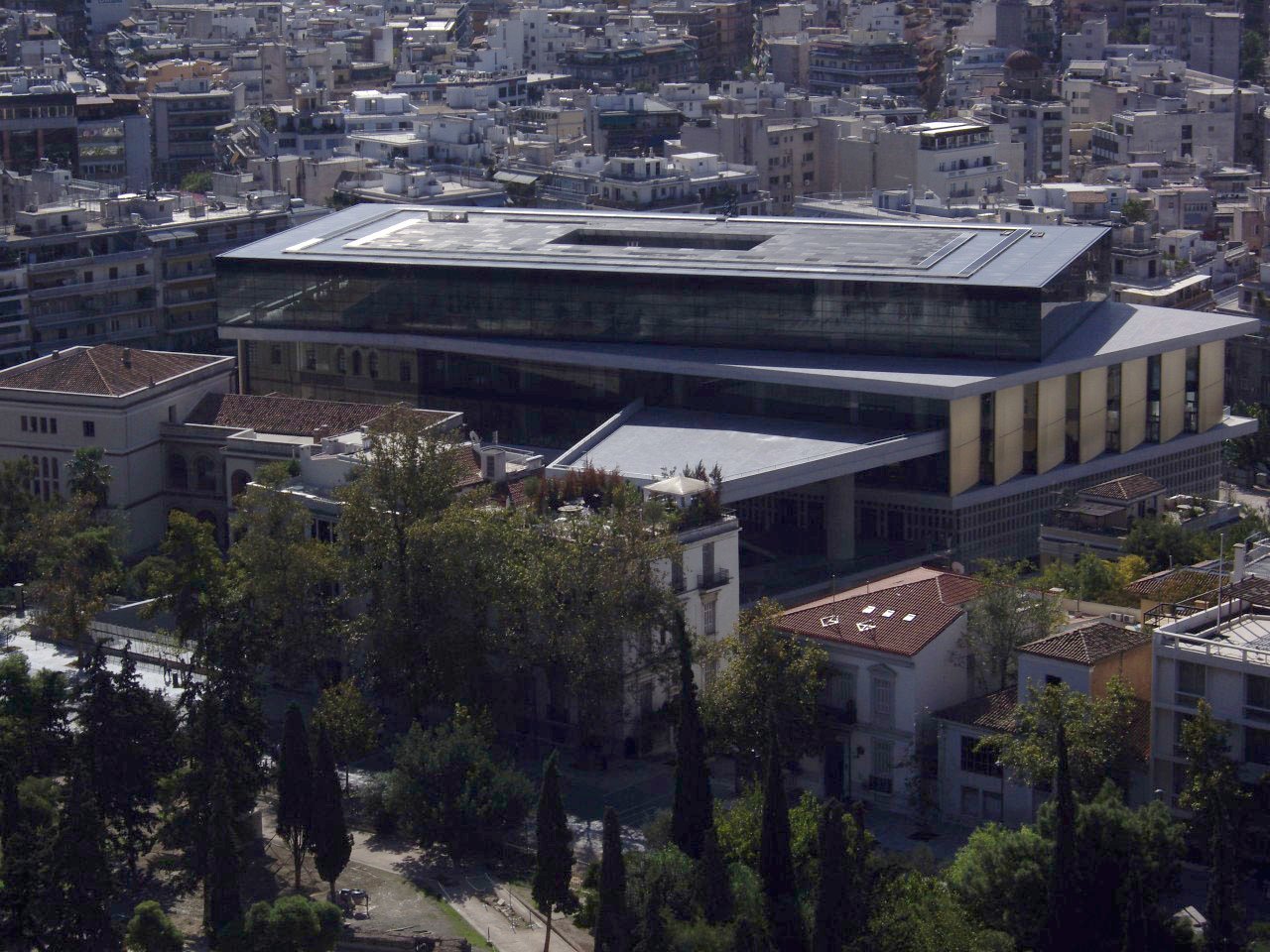 The new Acropolis Museum |
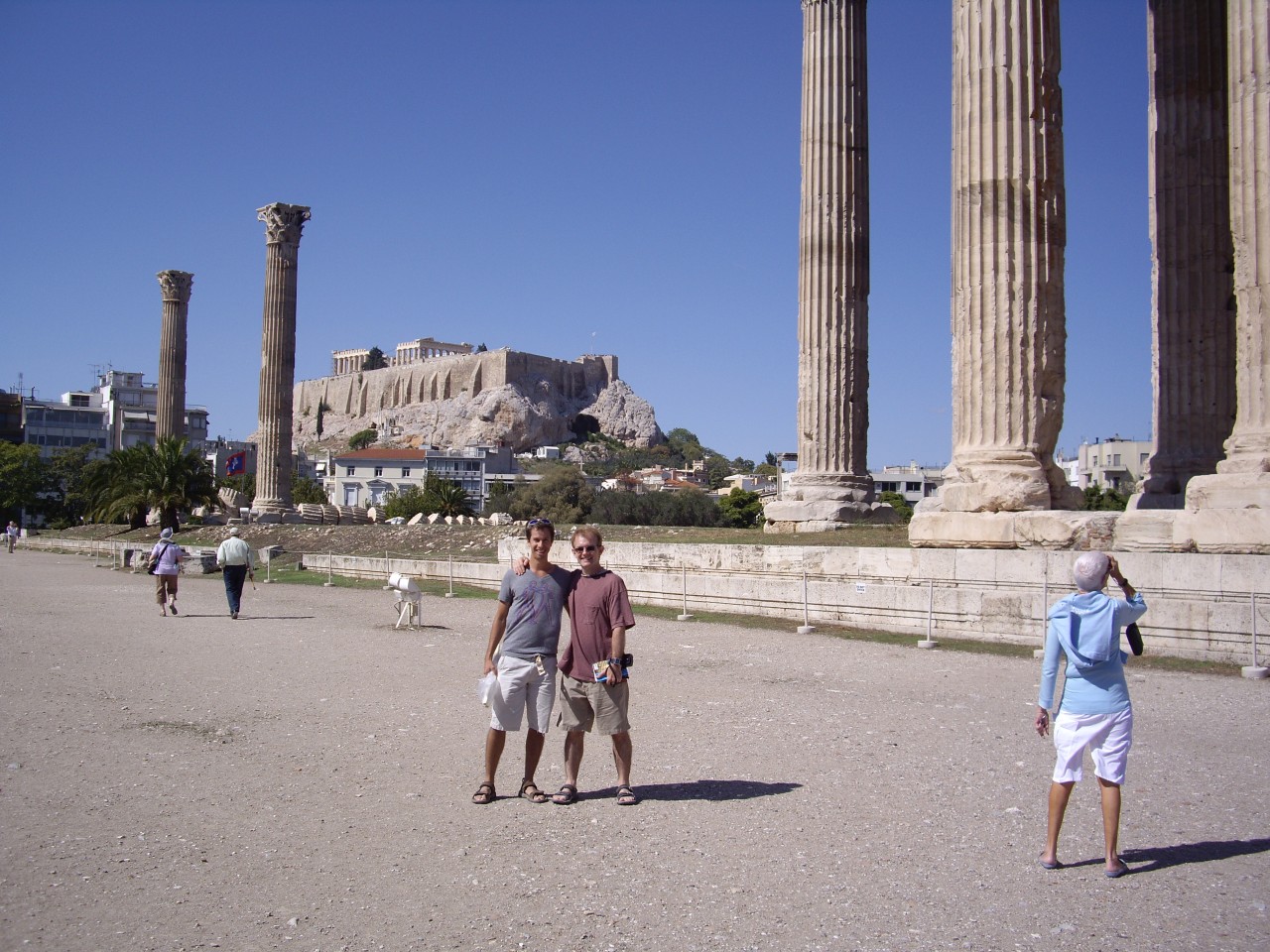 Acropolis from the Temple of Zeus |
At a small museum near the Roman Forum, we learned about an unusual vote that sometimes took place in ancient Athens. Anually, the people would be given the option to have an Ostracism Vote. If they elected to have it, then people would scratch the name of a citizen they wanted to expel on broken pottery and deposit them in urns. The names would be tallied up, and if there was a total of at least 6000 votes, then whoever got the highest number of votes had to leave in 10 days, and was exiled for 10 years. Looking at the collection of potshards in the museum, you could pick out names of famous Greeks, like Socrates.
Another interesting museum piece is the Antikythera mechanism, which could conceivably be called the oldest known computer. It is an astronomical and time keeping device of unprecedented precision for the age (around 150 to 100 BC). Its origin and exact purpose remain unknown. Recent subsurface scanning technology has provided new insights to its construction and inscriptions as recently as last year. The museum also has a recreation of the device made in the 1950s. The scanning technologies have shown that some of the assumptions in the recreation are incorrect, but it is still a beautiful piece of work.
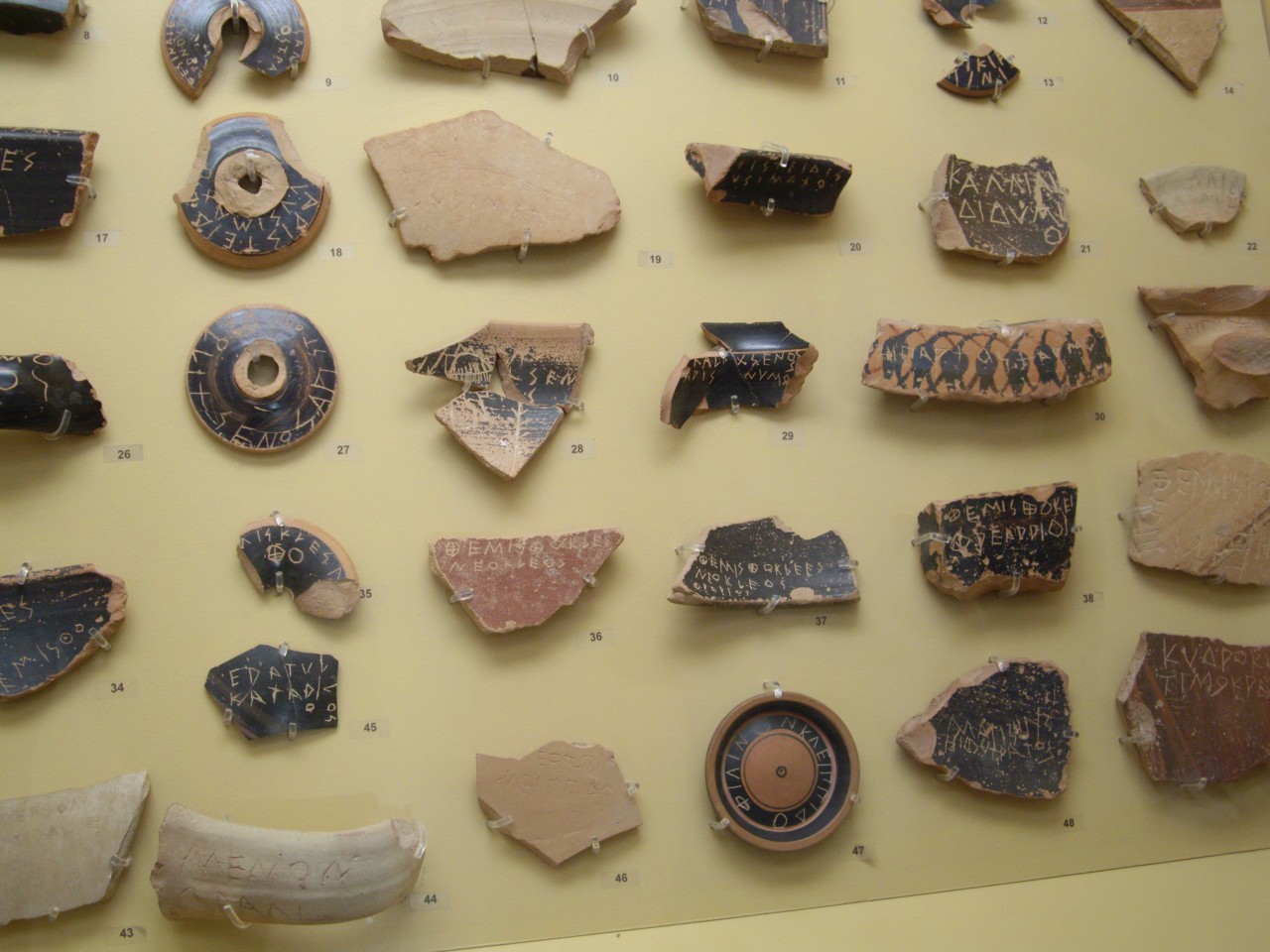 Ostracism Votes |
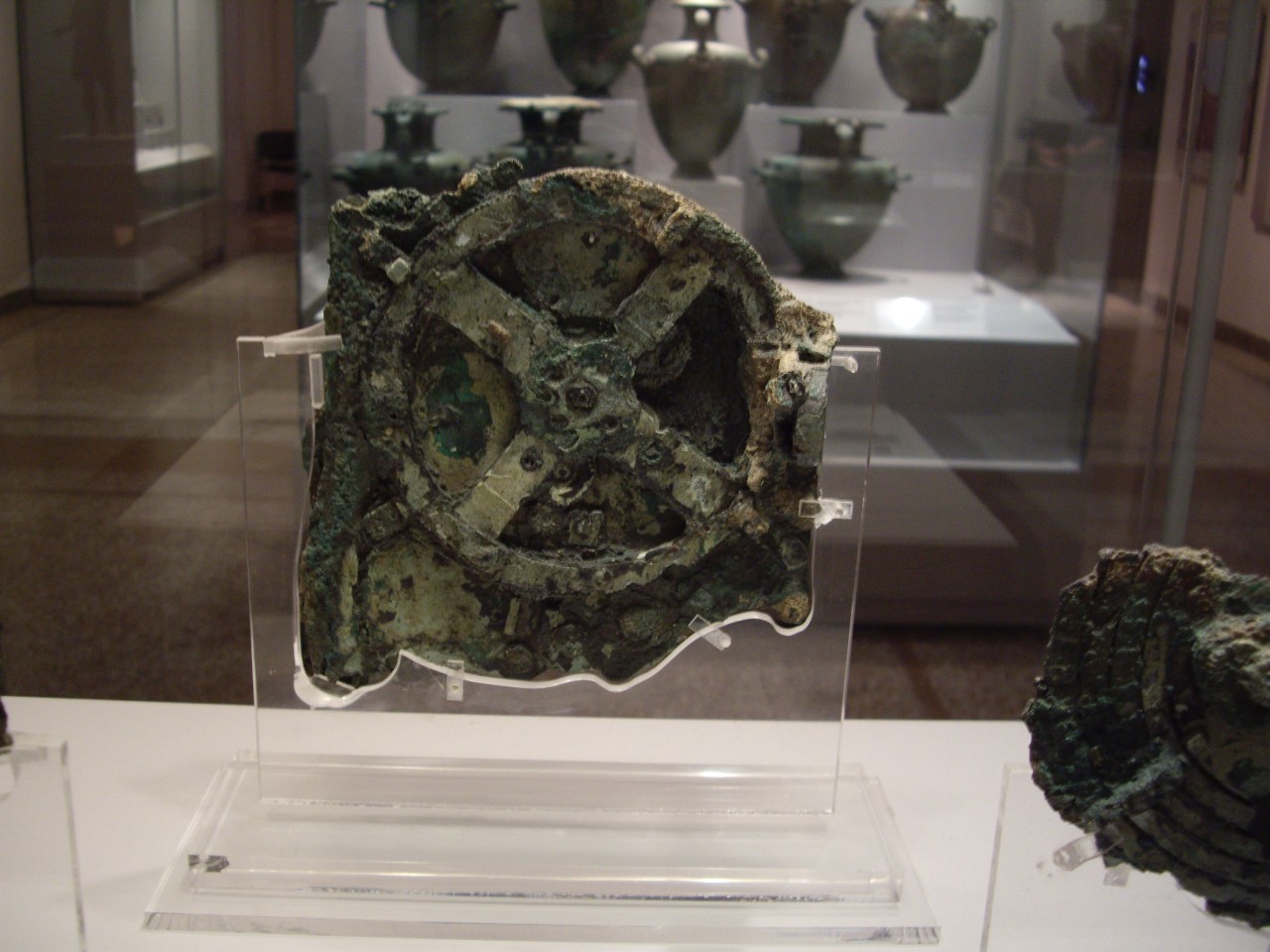 Antikythera Mechanism |
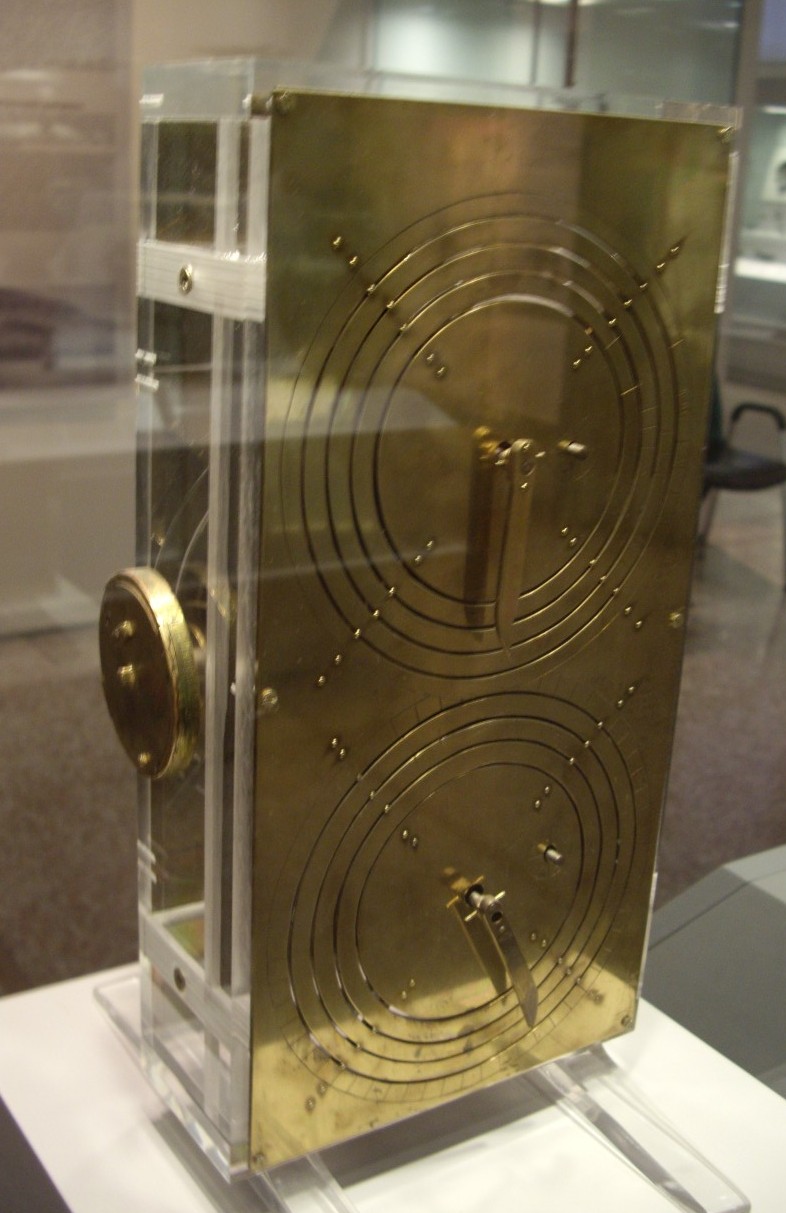 Reconstruction of the Antikythera Mechanism |
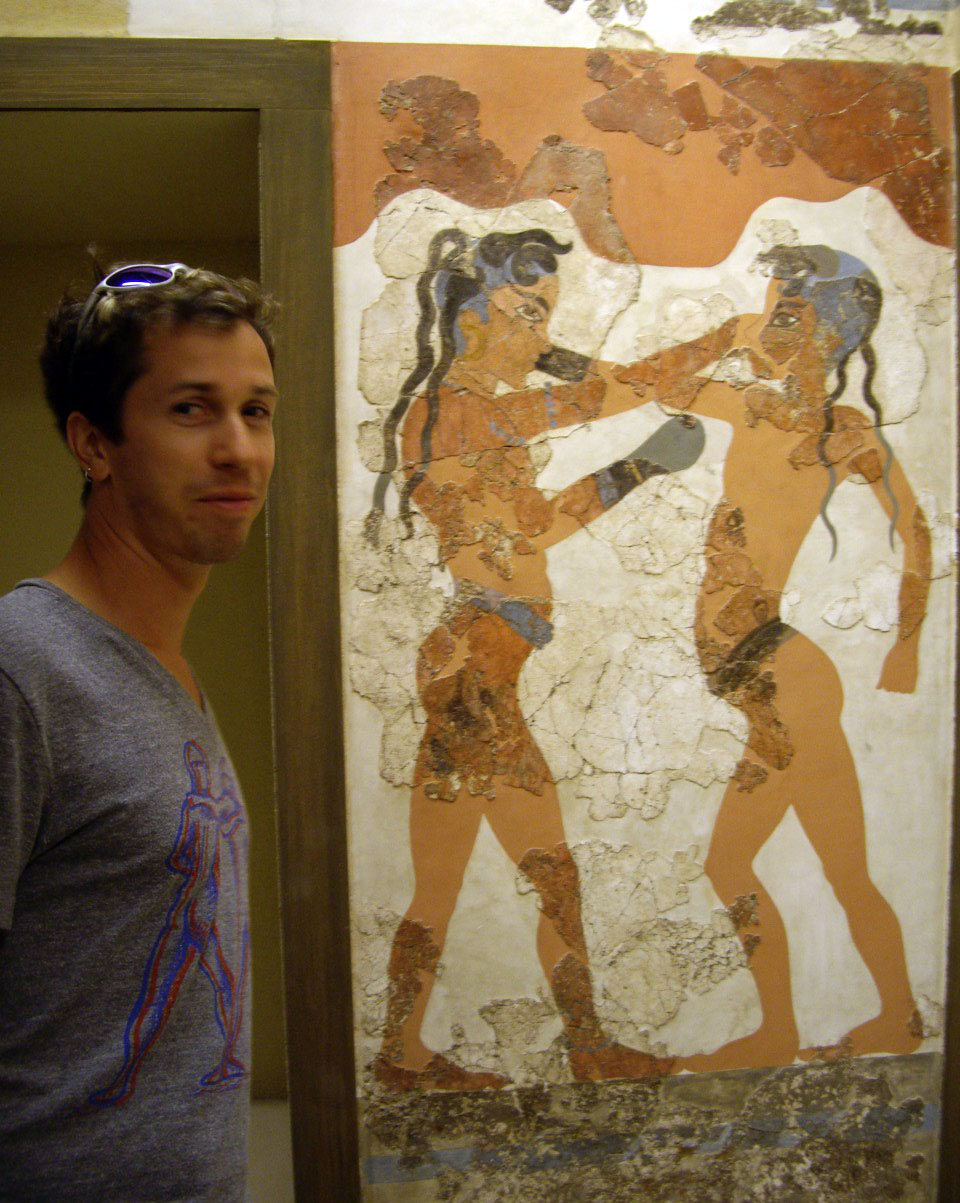 Santorini mural recreation |
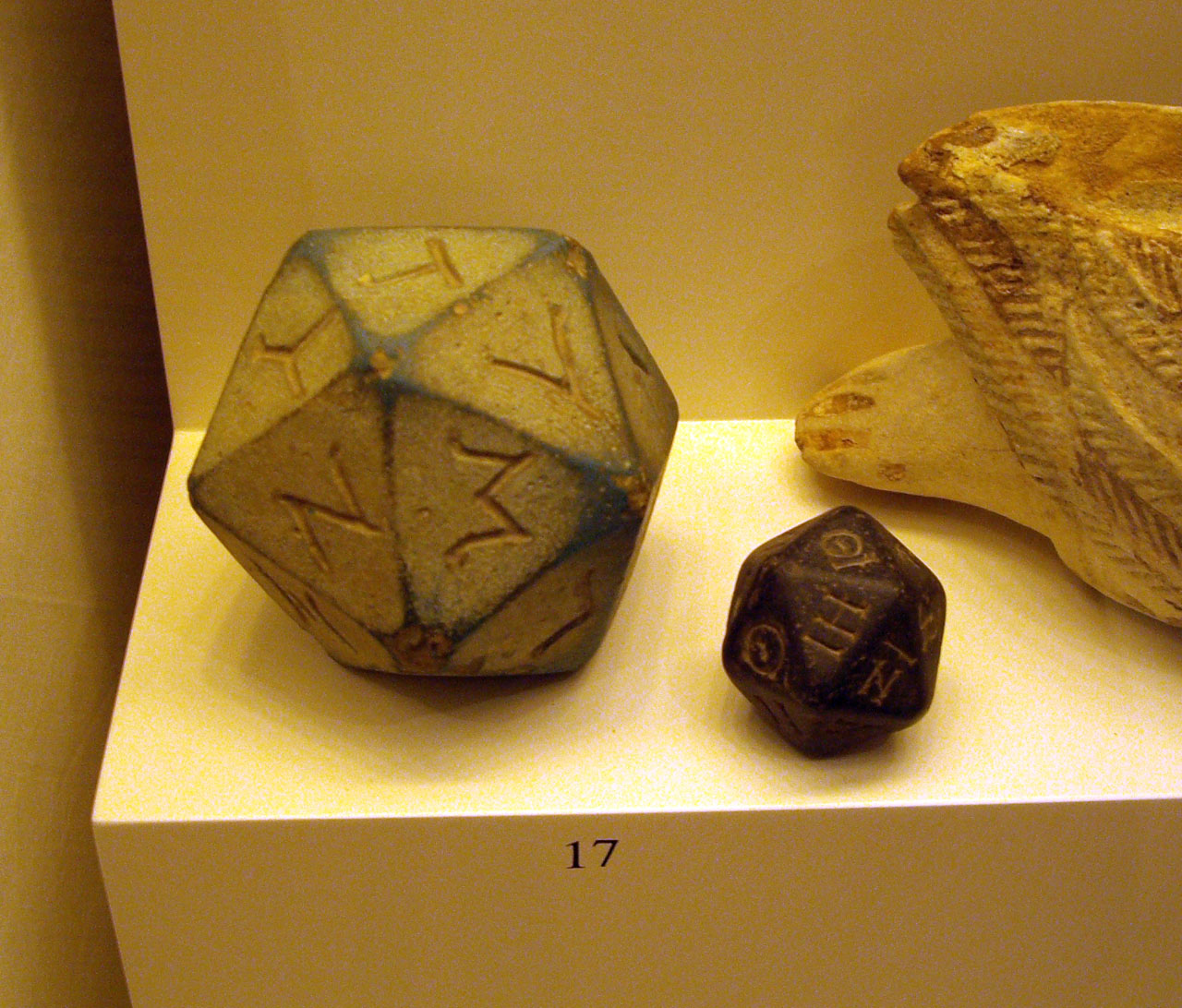 Ancient D20s |
While we were in Athens, we stopped in a department store for an errand, and I decided to check the video games to see if one that I had recently finished working on (the PS3 version of Medal of Honor: Airborne) was there. Sure enough, it was. It was a bit strange to see the familiar packaging, but with the same lettering on it that I'd been seeing on 2000+ year old monuments.
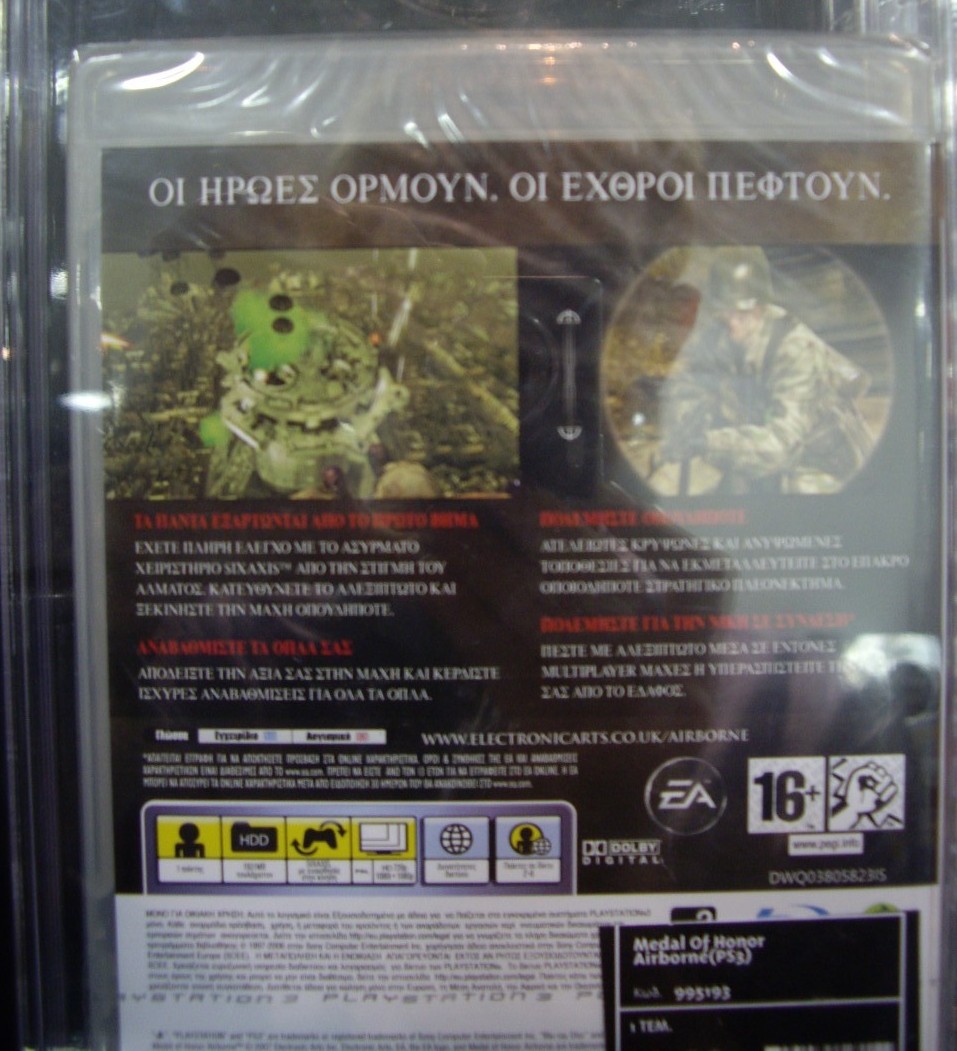 Greek MOH Airborne |
On the last (full) day in Athens, we finally managed to meet first-cousin-once-removed Nana (Anna Demetracopoulou Coneta), who is a first cousin of Danny's mother. We met for coffee and a stroll through a park and had a good chat. It turned out that Nana's son Dimitri lives in Ioannina, near where we got lost on the New Road, but we never knew. We made enthusiastic plans to get the entire Stavros (Danny's great-grandfather) lineage together in Constantinople (where Danny's grandfather was born) sometime. After a pleasant visit, we bid our farewells and went on our way.
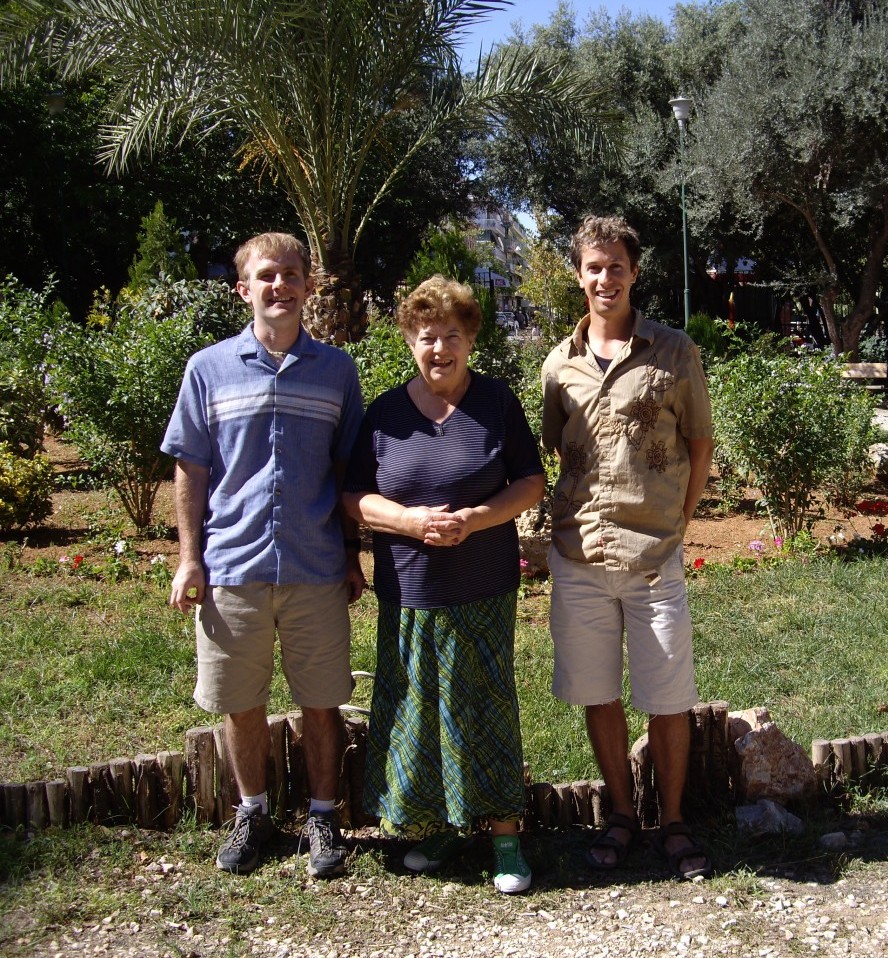 Nana |
Some good food in Athens:
Back to the beginning
Other trips